
The world of artificial intelligence is evolving at a staggering pace. Recent months have seen a massive wave of new launches, ranging from highly advanced reasoning models to specialized hardware like AI-powered smart glasses. Whether it is the rise of ‘agentic AI’ or significant leaps in memory efficiency, the technology is moving from experimental tools to essential enterprise infrastructure.
Table of Contents
Major AI Model Launches
The race for the most capable large language model (LLM) has intensified with several high-profile releases.
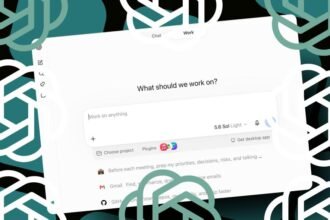
OpenAI’s GPT-5.1
OpenAI has introduced GPT-5.1, which features two distinct versions to cater to different user needs:
- GPT-5.1 Instant: Designed for speed and natural, fluid conversations.
- GPT-5.1 Thinking: Optimized for complex tasks requiring deep reasoning and clearer, structured answers.
To support this massive scale, OpenAI has entered a $38 billion strategic partnership with AWS to secure the necessary computing power.
Google’s Gemini 3.1 Ultra
Google has made a significant leap with Gemini 3.1 Ultra. This model is natively multimodal, meaning it can reason across text, images, audio, and video simultaneously without needing extra translation steps. It also boasts a massive 2-million-token context window, allowing it to process enormous amounts of data at once.
Efficiency and Open-Source Breakthroughs
As models grow larger, making them efficient and accessible is a top priority for developers.
Google Gemma 4 and TurboQuant
Google has released Gemma 4, its most capable series of open models to date. Built for advanced reasoning and agentic workflows, these models are designed to be highly intelligent relative to their size. Additionally, Google’s research into TurboQuant has introduced a breakthrough in memory compression, helping massive models run much more efficiently by reducing memory overhead.
xAI Grok 4.20
For users who prioritize real-time information, xAI launched Grok 4.20. By integrating deeply with the X (formerly Twitter) data stream, it offers industry-leading accuracy for news and current events.
The Era of Agentic AI and New Hardware
We are moving beyond simple chatbots into the era of “Agentic AI”—systems that can act as autonomous agents to complete complex workflows.
- NVIDIA’s Vision: At GTC 2026, NVIDIA signaled that enterprise-ready agentic frameworks are now the industry standard.
- Apple’s Smart Glasses: Apple is reportedly testing AI-powered smart glasses, moving toward wearable tech that integrates AI seamlessly into daily life as a fashion-forward accessory.
- Anthropic’s Hardware Ambitions: To secure the compute power needed for its powerful Claude models, Anthropic is considering designing its own custom AI chips.
Industry Shifts and Challenges
The rapid growth of AI is not without its setbacks. For example, OpenAI recently shut down Sora, its video-generation app, after high compute costs outweighed its revenue. Meanwhile, governments are beginning to step in, with legal probes in Florida and new AI restrictions in Colorado aimed at protecting users and managing real-world risks.
Frequently Asked Questions
What is agentic AI?
Agentic AI refers to AI systems that can act as autonomous agents. Instead of just answering questions, they can plan, use tools, and execute multi-step tasks to achieve a specific goal.
What makes Google’s Gemini 3.1 Ultra different?
Gemini 3.1 Ultra features a 2-million-token context window and native multimodal reasoning, allowing it to process and understand text, video, and audio all at once.
Why did OpenAI discontinue Sora?
Despite its popularity, Sora faced extremely high operational costs, burning an estimated $15 million per day, which led to its discontinuation.
What are AI smart glasses?
AI smart glasses are wearable devices, like those being tested by Apple, that use artificial intelligence to provide information or assistance directly in your field of view, often designed to look like normal eyewear.