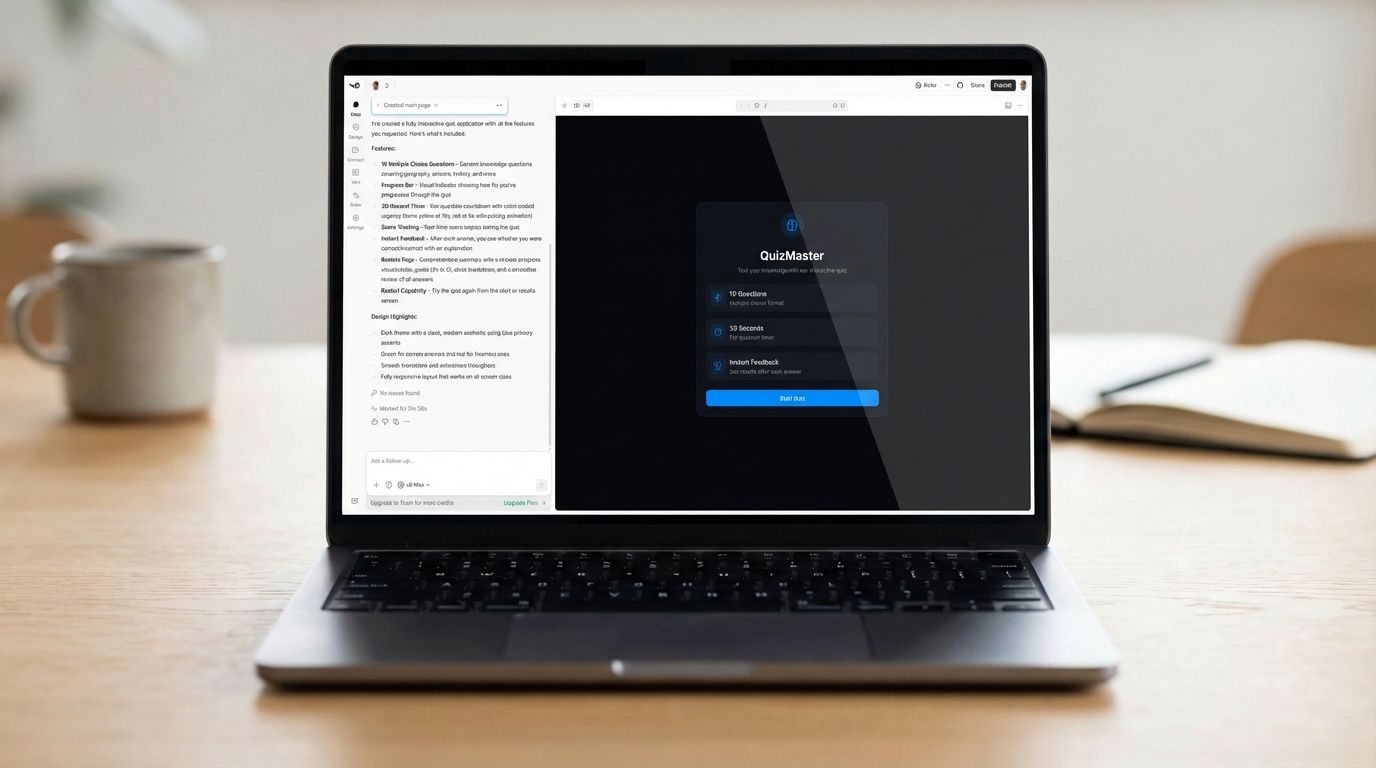
Vibe coding platforms are a new generation of development tools that allow users to build fully functional software using natural language prompts rather than manual coding. Instead of spending weeks writing syntax, you simply describe the “vibe” or the functionality of the app you want, and the AI generates the production-ready code in real-time.
This shift is transforming the software industry by removing the technical barriers between an idea and a working product. Whether you are a seasoned engineer looking to eliminate boilerplate or a non-technical founder wanting to launch an MVP, these tools can reduce development timelines from months to minutes.
Table of Contents
- What Exactly are Vibe Coding Platforms?
- Why Use Vibe Coding Tools?
- Top Vibe Coding Platforms for 2026
- How to Choose the Right Vibe Coding Tool
- The Future of the AI Economy and Development
- Frequently Asked Questions
What Exactly are Vibe Coding Platforms?
A vibe coding platform is a development environment that fuses artificial intelligence, low-code interfaces, and high-level automation. Unlike traditional Integrated Development Environments (IDEs) that require a deep knowledge of languages like Python or JavaScript, vibe platforms prioritize the user’s intent over the specific syntax.
These platforms typically offer a conversational interface where you can say, “Build me a dashboard that tracks real-time crypto prices and sends an alert when Bitcoin hits $100k,” and the system handles the API integrations, UI layout, and backend logic. According to Leanware, these tools blur the line between creativity and code, allowing designers, product managers, and marketers to contribute directly to the build process.
Crucially, vibe coding does not replace professional developers. Instead, it empowers them. Most of these platforms allow “escape hatches” where a developer can dive into the underlying code to tweak logic, optimize performance, or add custom security layers that the AI might have missed.
Why Use Vibe Coding Tools?
The primary appeal of vibe coding is the drastic reduction in “time to value.” For many businesses, the biggest hurdle to innovation is the engineering bottleneck. Vibe coding platforms solve this by offering several key advantages:
Rapid Prototyping and MVP Launch
Building a Minimum Viable Product (MVP) used to require a budget of tens of thousands of dollars and months of work. With vibe coding, you can generate a working prototype in an afternoon. This allows startups to test their hypotheses with real users immediately rather than spending six months building a product that might not fit the market.
Democratization of Software Creation
By using natural language, these platforms open the door for non-coders. A business analyst can now set up complex data flows or automation logic using guided editors without waiting for a developer’s availability. This prevents ideas from being lost in a backlog of Jira tickets.
Increased Developer Velocity
For professional engineers, vibe coding eliminates the drudgery of boilerplate code. By automating repetitive setup and providing AI-powered autocompletion, developers can focus on high-level architecture and complex problem-solving rather than fighting with syntax errors. You can learn more about optimizing your workflow in our guide on [internal-link: ai-developer-productivity].
Top Vibe Coding Platforms for 2026
Depending on your goals—whether you are building a simple landing page or a complex enterprise system—different tools will serve you better. Here are the top 12 vibe coding platforms categorized by their primary strength.
Best for Rapid UI and Prototyping
- Vercel v0: Widely considered one of the best overall tools for generating UI components instantly from text prompts. It is ideal for those who need to move from a concept to a working interface in minutes.
- Bolt: A powerful tool focused on speed and smart automation for fast app deployment.
- Base44: An AI-powered platform that streamlines the bridge between design and functional code.
Best for Entrepreneurs and Small Businesses
- Hostinger Horizons: Specifically tailored for small business owners who need a professional web presence without hiring a full-time dev team.
- Replit: A cloud-based collaborator that requires zero setup. It is perfect for remote teams and beginners who want to code, collaborate, and deploy in a single browser tab.
- Wix Harmony: A scaling-focused tool that allows users to grow their site and app capabilities as their business expands.
Best for Enterprise-Grade Apps
- Lovable: A powerhouse in the vibe coding space. Lovable has seen explosive growth, reaching a $6.6 billion valuation by allowing enterprises to build complete apps via text prompts. It is used by giants like Uber and Klarna to accelerate project delivery.
- OutSystems: A dedicated enterprise platform that focuses on robust, scalable, and secure application development for large organizations.
- Riff: An Oslo-based startup focusing on enterprise automation tools, recently securing significant funding to scale its vibe coding capabilities for corporate use.
Best for Professional Developer “Vibes”
Some tools aren’t full app builders but rather “vibe-enhanced” environments that make the act of coding feel seamless and fluid.
- Cursor: An AI-native code editor that understands your entire codebase, making refactoring and feature addition feel intuitive.
- Zed: A minimalist, lightning-fast editor designed for those who value performance and a distraction-free interface.
- Warp: A reimagined terminal that brings AI and collaboration to the command line.
- Raycast: While not a traditional IDE, it acts as a productivity hub that enhances developer workflows through smart scripts and system navigation.
Image Opportunity: A comparison chart showing “Traditional Coding” vs. “Vibe Coding” workflows. Alt text: Comparison of traditional development and modern vibe coding platforms.
How to Choose the Right Vibe Coding Tool
Selecting the right platform depends on your technical skill level and the complexity of your project. Use this checklist to guide your decision:
- Are you a non-coder? Look for platforms like Lovable or Hostinger Horizons that prioritize text-to-app generation and hosting.
- Are you building a prototype? Vercel v0 or Bolt are best for quickly visualizing a UI and testing a concept.
- Are you an experienced dev? Cursor or Zed will enhance your existing skills without taking away your control over the code.
- Do you need enterprise security? OutSystems or Riff provide the governance and scalability required for corporate environments.
- Is collaboration a priority? Replit is the gold standard for real-time, cloud-based co-editing.
The Future of the AI Economy and Development
Vibe coding is more than just a set of tools; it is the foundation of a new AI economy. As highlighted by Forbes, this shift is changing how value is created in tech. When the cost of producing software drops toward zero, the value shifts from how to build to what to build.
We are moving toward a world where the “Product Manager” and the “Developer” merge into a single role: the Architect. In this new era, the most successful people won’t be those who can memorize the most syntax, but those who can clearly articulate a vision and iterate on it using AI. The massive funding seen by companies like Lovable suggests that the market is betting heavily on this transition.
Frequently Asked Questions
Is vibe coding the same as no-code?
Not exactly. No-code tools often use rigid visual builders (drag-and-drop) that can limit what you can create. Vibe coding uses AI to generate actual code. This means you have the ease of no-code but the unlimited flexibility of traditional coding, as you can always edit the generated source code.
Do I need to know how to code to use these platforms?
No. The primary goal of vibe coding platforms is to allow anyone who can describe a problem in English (or other natural languages) to create a solution. However, knowing basic coding concepts can help you refine the AI’s output more effectively.
Are apps built with vibe coding secure?
Most modern platforms implement industry-standard security, but AI can occasionally make mistakes. For enterprise-level apps, it is recommended to use platforms like OutSystems or have a professional developer review the AI-generated code to ensure there are no vulnerabilities.
Which vibe coding platform is best for beginners?
Replit is excellent for beginners because it handles all the environment setup in the cloud. For those who want to build a business site without any technical knowledge, Hostinger Horizons is a great starting point.