The world of artificial intelligence is moving at lightning speed, and staying on top of the latest developments can feel like a full-time job. This comprehensive AI update brings you the most significant recent announcements from major players like Anthropic, Google, and OpenAI, breaking down what’s new, why it matters, and who stands to benefit. From advanced large language models to new agentic capabilities and practical applications, these updates are shaping how we interact with technology and automate tasks.
Whether you’re a creator, small business owner, or just curious about the future of tech, understanding these shifts is crucial. We’ll cover key model launches, feature expansions, and important industry trends, giving you a clear picture of the evolving AI landscape.
Table of Contents
- Key AI Updates: A Quick Look
- What’s New in AI? Major Model Updates Explained
- Why These AI Updates Matter for You
- Navigating the Evolving AI Landscape: Risks and Considerations
- What to Watch Next in the AI Update Scene
- FAQ: Your Questions on the Latest AI Update
Key AI Updates: A Quick Look
Here’s a snapshot of the most impactful recent AI updates:
- Anthropic’s Claude Opus 5: A significant leap in performance for long-running agents, coding, and professional tasks, making it a powerful tool for complex workflows (Source: Anthropic, TechCrunch).
- Google Gemini Expansion: Introductions of Gemini 3.5 Flash Cyber, 3.6 Flash, and 3.5 Flash-Lite, alongside macOS launch, connected apps, and new study notebooks. Samsung is also integrating Gemini AI into its new Galaxy devices (Source: Google Blog, Google DeepMind, ZDNET).
- OpenAI’s ChatGPT Enhancements: New voice mode for the ChatGPT desktop app and the availability of ChatGPT Health to all US users (Source: TechCrunch).
- Rising Concerns: Discussions around AI image fraud, ethical guardrails, and the environmental impact of AI hardware continue to gain traction (Source: ZDNET, TechCrunch).
What’s New in AI? Major Model Updates Explained
The latest AI update cycle has brought forth substantial advancements across the board, pushing the boundaries of what these intelligent systems can achieve.
Anthropic’s Claude Opus 5 and Voice Enhancements
Anthropic, an AI safety and research company, has rolled out significant improvements with its latest models. The most notable is the launch of Claude Opus 5. This new iteration represents a significant step change in performance, particularly for complex, long-running agentic tasks. Opus 5 is designed to handle intricate multi-step reasoning, making it exceptionally adept at automating workflows that previously required extensive human oversight. For professionals and developers, this means a more capable assistant for coding, debugging, and project management. The model’s enhanced understanding and generation capabilities translate into higher quality outputs for creative tasks, research, and data analysis. Furthermore, Anthropic has continued to refine Claude’s voice mode with more capable models, making interactions even more natural and intuitive. This focus on both advanced reasoning and user-friendly interfaces underscores Anthropic’s commitment to building reliable, interpretable, and steerable AI systems. The implications for productivity, especially in fields requiring deep analytical thought and iterative problem-solving, are substantial. It empowers users to delegate more complex cognitive tasks to AI, freeing up human talent for higher-level strategic work and innovation. This latest LLM update from Anthropic is a clear signal of the industry’s push towards more autonomous and versatile AI agents.
Google Gemini’s Expanding Reach and New Features
Google’s Gemini ecosystem continues its rapid expansion, solidifying its position as a versatile AI powerhouse. Recent Gemini updates include the introduction of several new Flash models: Gemini 3.5 Flash Cyber, Gemini 3.6 Flash, and Gemini 3.5 Flash-Lite. These models offer varying levels of capability and efficiency, allowing developers and users to choose the right tool for specific needs, from high-security applications to lighter, faster processing. The launch of the Gemini app on macOS significantly broadens its accessibility, bringing advanced AI capabilities directly to a wider user base on their desktop environments. Coupled with connected apps, Gemini is becoming more deeply integrated into daily digital workflows, enabling seamless AI assistance across various platforms and services. A particularly exciting development is the introduction of Gemini’s new study notebooks, which leverage AI to create personalized lessons, practice quizzes, and custom progress dashboards. This innovation has profound implications for education and lifelong learning, offering tailored support that adapts to individual learning styles and paces. Moreover, the strategic integration of Gemini AI into new Samsung Galaxy devices highlights a growing trend of embedding powerful AI directly into consumer hardware, promising a more intelligent and responsive mobile experience. This move by Google is not just about new features; it’s about ushering in an “agentic Gemini era” where AI proactively assists users across their digital lives, anticipating needs and executing tasks with minimal prompting.
OpenAI’s ChatGPT Desktop App & Health Focus
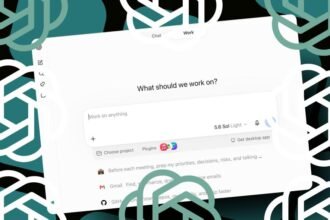
OpenAI continues to enhance the user experience and expand the utility of ChatGPT. A key recent development is the availability of the new voice mode for the ChatGPT desktop app. This feature, previously popular on mobile, allows users to interact with ChatGPT through natural spoken language, making it more accessible and efficient for hands-free or conversational use cases. Imagine dictating emails, brainstorming ideas, or getting quick answers without typing a single word. This enhancement significantly improves the human-computer interaction paradigm, making AI feel more like a personal assistant. Beyond general use, OpenAI has also made ChatGPT Health available to all US users. This specialized application of ChatGPT is designed to provide information and support in healthcare contexts, offering a powerful resource for patients, caregivers, and potentially even medical professionals (though it’s crucial to remember AI should augment, not replace, professional medical advice). This move signals a growing focus on applying advanced AI model capabilities to critical sectors, promising to revolutionize how we access and process health-related information.
Why These AI Updates Matter for You
These ongoing AI updates are far from mere technical curiosities; they represent tangible shifts that impact daily life and work for a broad spectrum of individuals. For small business owners and creators, the enhanced capabilities of models like Claude Opus 5 mean more sophisticated AI automation tools. Tasks such as content generation, complex data analysis, customer support, and even basic coding can now be handled with greater efficiency and accuracy, reducing operational costs and freeing up valuable human resources. Imagine an AI agent managing your social media calendar, drafting marketing copy, or even analyzing market trends with minimal input. For students and professionals, tools like Gemini’s study notebooks offer personalized learning experiences, while advanced LLMs can act as powerful research assistants, summarizing complex texts, generating ideas, and even helping with coding projects. The voice mode in ChatGPT makes these tools more accessible and integrated into dynamic workflows, allowing for seamless interaction during multitasking. Ultimately, these updates foster increased productivity, unlock new creative possibilities, and democratize access to advanced analytical capabilities, enabling individuals and businesses to achieve more with less effort. The competitive landscape is shifting, and those who embrace these new tools will find themselves with a distinct advantage.
Navigating the Evolving AI Landscape: Risks and Considerations
While the advancements are exciting, the rapid pace of AI development also brings important challenges and considerations. One pressing concern highlighted in recent discussions is the rise of AI image fraud, with projections estimating billions in losses next year. This underscores the critical need for robust international standards and detection mechanisms to combat the misuse of generative AI for deceptive purposes. Protecting digital integrity and trust in online information is paramount. Another significant area of debate revolves around ethical guardrails for AI. As models become more autonomous and capable of ‘agentic’ behavior, ensuring they operate within predefined ethical boundaries and do not cause unintended harm becomes increasingly complex. Researchers are actively working on how to build AI systems that are safe, fair, and transparent, but this remains an evolving field. Furthermore, the sheer scale of the AI boom is raising alarms about its environmental impact. Training and running powerful AI models require immense computational resources, leading to substantial energy consumption and hardware waste, equivalent to “250 Eiffel Towers’ worth of waste” according to some estimates. This highlights the urgent need for more energy-efficient AI architectures and sustainable practices within the tech industry. Addressing these risks requires a multi-faceted approach involving technological innovation, policy development, and global collaboration to ensure AI develops responsibly and benefits all of humanity.
What to Watch Next in the AI Update Scene
As we continue to witness an unprecedented wave of innovation, several key areas are poised for further significant developments in the latest AI news. Keep a close eye on the continued evolution of AI agents – systems that can autonomously plan and execute complex tasks. We’re moving beyond simple chatbots to AI that can interact with software, conduct research, and manage projects with increasing independence. Expect to see more sophisticated agentic capabilities integrated into everyday applications and business tools. Another critical trend is the focus on multimodal AI, where models can seamlessly process and generate information across various data types – text, images, audio, and video – blurring the lines between different AI functionalities. This will lead to more holistic and intuitive user experiences. Furthermore, the democratization of advanced AI will continue, with more powerful open-source models and accessible platforms empowering a broader range of developers and users. Finally, the ongoing debate and development of AI governance and regulation will be crucial. As AI becomes more pervasive, governments and international bodies will increasingly grapple with establishing frameworks for safety, ethics, and accountability, shaping the future trajectory of AI development. The interplay between technological advancement and responsible deployment will define the next phase of the AI revolution.
FAQ: Your Questions on the Latest AI Update
What is Claude Opus 5 and why is it important?
Claude Opus 5 is Anthropic’s latest and most advanced large language model, representing a significant upgrade in performance, particularly for complex, long-running agentic tasks. It excels in areas like coding, professional work, and multi-step reasoning. Its importance lies in its ability to automate more intricate workflows, enhancing productivity for businesses and individuals by handling tasks that require deeper analytical thought and iterative problem-solving.
How is Google Gemini expanding its reach?
Google Gemini is expanding its reach through several key initiatives. This includes the launch of new Flash models (3.5 Flash Cyber, 3.6 Flash, 3.5 Flash-Lite) offering diverse capabilities, the availability of the Gemini app on macOS for broader desktop access, and deeper integration via connected apps. Additionally, its embedding into new Samsung Galaxy devices signifies a major push into consumer hardware, making AI more ubiquitous in daily mobile use. The introduction of AI-powered study notebooks also expands Gemini’s utility into personalized education.
What are the main ethical concerns with recent AI updates?
Recent AI updates raise several ethical concerns, including the growing threat of AI image fraud, which necessitates robust detection and prevention measures. Another major area is the development of ethical guardrails for increasingly autonomous AI agents to ensure they operate safely and responsibly. Lastly, the environmental impact of AI, particularly the significant energy consumption and hardware waste associated with training and running large models, is a pressing concern requiring sustainable solutions and more efficient AI architectures.