The artificial intelligence landscape is experiencing rapid evolution, with major tech companies consistently unveiling groundbreaking advancements. Recent announcements highlight a significant push towards more capable and ‘agentic’ AI systems, enhanced model performance, and broader accessibility. These new launches in AI are fundamentally reshaping how we interact with technology, impacting everything from everyday tasks to complex professional applications.
For general readers, creators, small business owners, students, and professionals, staying updated on these developments is crucial. This article breaks down the most impactful recent AI launches, explaining what they are, why they matter, and what to watch for next.
Table of Contents
- Quick Facts: Key AI Launches at a Glance
- Google’s Gemini: The Agentic Era and Beyond
- Anthropic’s Claude: Opus 5 and Enhanced Performance
- Other Notable AI Developments
- Why These New AI Launches Matter
- Who is Affected by These AI Updates?
- What to Watch Next in AI
- FAQ About New AI Launches
Quick Facts: Key AI Launches at a Glance
- Google Gemini: Entering an “agentic era” with new models like 3.5 Flash Cyber, 3.6 Flash, 3.5 Flash-Lite, and Omni Flash. Expanded platform integration now includes macOS and connected apps, making Gemini more accessible and powerful for a wider range of users (blog.google, deepmind.google).
- Anthropic Claude: Introduced Opus 5, a significant upgrade for powering long-running agents, coding, and professional tasks. Other models like Fable 5 and Sonnet 5 also deliver frontier performance across various applications (anthropic.com, techcrunch.com).
- OpenAI: Rolled out a new voice mode for the ChatGPT desktop app and made ChatGPT Health available to all US users (techcrunch.com).
- AMD: Launched its Helios AI rack-scale system, directly competing with Nvidia in the high-performance AI hardware market (techcrunch.com).
- Runway: Introduced an AI model router, designed to streamline the management of generative media models as the field becomes more crowded (techcrunch.com).
Google’s Gemini: The Agentic Era and Beyond
Google’s AI division, including Google DeepMind, is heavily focused on expanding the capabilities of its Gemini models. They are ushering in what they term the “agentic Gemini era,” where AI systems are designed to be more proactive and capable of handling complex, multi-step tasks with minimal human intervention (blog.google).
Gemini’s Agentic Capabilities
The core idea behind the agentic era is to move beyond simple conversational AI to systems that can plan, execute, and adapt to achieve specific goals. This means Gemini models are being developed to understand context better, break down large problems, and leverage various tools to complete tasks autonomously. This approach can significantly enhance AI automation tools for businesses and individuals.
Key Gemini Model Updates (Flash Cyber, Flash-Lite, Omni Flash)
Google has introduced several new and updated Gemini models. These include Gemini 3.5 Flash Cyber, Gemini 3.6 Flash, 3.5 Flash-Lite, and Gemini Omni Flash. Each variant is optimized for different use cases, offering varying levels of speed, efficiency, and capability. For instance, Flash models are designed for speed and cost-effectiveness, while Omni Flash aims for multimodal excellence. These latest Gemini AI updates represent Google’s commitment to diverse AI solutions.
Expanding Reach: macOS & Connected Apps
To make Gemini more accessible, Google has launched Gemini Spark updates, bringing the AI to macOS and enabling integration with various connected apps. This expansion allows users to incorporate Gemini’s power directly into their workflows across different devices and software, enhancing productivity and creative potential (blog.google).
Anthropic’s Claude: Opus 5 and Enhanced Performance
Anthropic, an AI safety and research company, has also made significant strides with its Claude models, emphasizing reliability, interpretability, and steerability. Their new launch in AI is particularly noteworthy for its focus on advanced agent capabilities and professional applications.
Claude Opus 5: A Leap for Agents & Professionals
The flagship announcement from Anthropic is Claude Opus 5, described as a “step change improvement” for powering long-running agents while delivering enhancements in coding and professional work (anthropic.com, zdnet.com). This means Opus 5 is designed to handle more complex, sustained tasks, making it a powerful tool for developers, researchers, and business professionals.
Other Claude Model Updates (Fable 5, Sonnet 5)
Beyond Opus 5, Anthropic has also highlighted Fable 5 and Sonnet 5. Fable 5 is returning globally with an industry-wide framework for scoring jailbreak severity, a collaboration with tech giants like Amazon, Microsoft, and Google. Sonnet 5, on the other hand, delivers frontier performance across coding, agents, and general professional work at scale (anthropic.com). These models collectively contribute to the latest LLM updates, offering users a range of powerful options.
Focus on AI Safety and Benchmarking
Anthropic continues its commitment to AI safety, actively engaging the public with questions about AI and demonstrating its work in addressing them. Their collaboration on jailbreak severity frameworks underscores a broader industry effort to ensure AI systems are robust and secure, a critical aspect of new AI model breakthroughs.
Other Notable AI Developments
While Google and Anthropic lead with major model updates, other companies are also pushing the boundaries of AI with significant new launches.
OpenAI’s Latest: ChatGPT Voice & Health
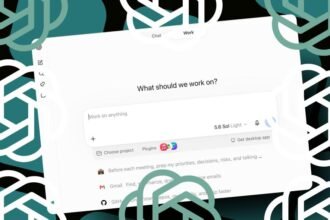
OpenAI has expanded the utility of its popular ChatGPT platform. A new voice mode is now available for the ChatGPT desktop app, allowing for more natural and hands-free interaction. Furthermore, ChatGPT Health has been launched for all US users, indicating a move towards specialized AI applications in critical sectors (techcrunch.com).
Hardware & Infrastructure: AMD’s Helios
The demand for powerful AI models drives innovation in hardware. AMD has stepped up its game with the launch of its Helios AI rack-scale system, positioning itself as a strong competitor to Nvidia in providing the computational backbone for advanced AI operations (techcrunch.com). This highlights the ongoing race to build more efficient and powerful AI infrastructure.
Creative AI & Automation: Runway’s Model Router
As generative media becomes more prevalent, managing various AI models for creative tasks can be complex. Runway has introduced an AI model router to address this, simplifying the process of directing tasks to the most suitable generative media model (techcrunch.com). This tool is particularly useful for creators and small businesses leveraging AI for content generation.
Why These New AI Launches Matter
These recent AI launches are more than just technical updates; they represent a significant shift in how AI can be integrated into our daily lives and professional workflows. They matter because they:
- Increase Accessibility: Features like ChatGPT’s voice mode and Gemini’s macOS integration make advanced AI tools easier for a broader audience to use.
- Boost Productivity: Agentic AI systems and improved LLMs can automate more complex tasks, freeing up time for creative and strategic work.
- Drive Innovation: Competition in AI hardware (like AMD’s Helios) and model development pushes the entire industry forward, leading to even more powerful and efficient solutions.
- Address Specialized Needs: Launches like ChatGPT Health show a growing trend towards AI tailored for specific industries, offering targeted solutions.
- Enhance Safety and Reliability: Anthropic’s focus on AI safety and industry-wide benchmarking efforts are crucial for building trust and ensuring responsible AI development.
Who is Affected by These AI Updates?
Virtually everyone who interacts with technology will be affected by these latest AI news and updates, but some groups will feel the impact more directly:
- General Consumers: Will experience more intuitive AI interactions through voice modes and smarter assistants.
- Creators and Small Business Owners: Can leverage more powerful generative AI for content, marketing, and automation, streamlining operations and enhancing output.
- Students and Professionals: Gain access to advanced tools for research, coding, data analysis, and learning, potentially transforming how they study and work.
- Developers and Researchers: Benefit from more sophisticated models and robust infrastructure, accelerating their own AI projects and discoveries.
- Healthcare Professionals: Specialized tools like ChatGPT Health could assist in various medical applications, from information retrieval to patient support.
What to Watch Next in AI
The pace of AI innovation shows no signs of slowing down. Here’s what to keep an eye on:
- Further Agentic AI Development: Expect more AI systems capable of autonomous, multi-step problem-solving across various domains.
- Multimodal AI Expansion: Models that seamlessly integrate text, image, audio, and video will become more sophisticated and common.
- Hardware Wars: The competition between chip manufacturers like AMD and Nvidia will intensify, leading to even more powerful and energy-efficient AI processors.
- Ethical AI Frameworks: As AI becomes more powerful, discussions and implementations of ethical guidelines, safety protocols, and regulatory standards will grow in importance.
- Specialized AI Applications: Look for more AI tools tailored for specific industries, offering deep expertise and practical solutions beyond general-purpose models.
FAQ About New AI Launches
What is the bottom line on new launch in AI?
The bottom line is that AI is becoming more capable, specialized, and accessible. Recent launches from Google (Gemini’s agentic era), Anthropic (Claude Opus 5 for advanced tasks), and OpenAI (ChatGPT voice and health features) signify a shift towards AI that can perform complex tasks autonomously, integrate more seamlessly into daily life, and serve specific industry needs.
Who are these new AI launches best for?
These new AI launches cater to a broad audience. Professionals in coding, creative industries, and business can benefit from enhanced agent capabilities and specialized tools. General users will find AI more intuitive through voice interfaces and broader platform integration. The healthcare sector, in particular, stands to gain from dedicated AI applications like ChatGPT Health.
What are the main benefits and risks of these new AI developments?
Benefits: Increased productivity through automation, enhanced creative capabilities, more intuitive user experiences, and tailored solutions for specific industries. These advancements also drive further innovation across the tech sector. Risks: Concerns include the environmental impact of AI hardware (e.g., “250 Eiffel Towers’ worth of waste” from AI boom, according to ZDNET zdnet.com), potential for AI image fraud, and the need for robust AI guardrails to prevent misuse or unintended consequences (techcrunch.com).
How do these new AI models compare with alternatives?
The new models from Google (Gemini Flash series, Omni Flash) and Anthropic (Claude Opus 5, Fable 5, Sonnet 5) generally offer advancements in performance, efficiency, and specialized capabilities compared to previous generations. For instance, Claude Opus 5 aims for near Fable performance at a lower price point (zdnet.com). The competition among these leading LLM updates drives continuous improvement, offering users diverse options based on their specific needs for speed, accuracy, or cost.
What should readers check before deciding on a new AI tool or model?
Before adopting a new AI tool or model, readers should consider: its specific capabilities and how they align with their needs, its cost and resource requirements, privacy and data security policies, the level of support and community available, and any known limitations or risks. Evaluating these factors will help ensure the chosen AI solution is both effective and responsible.