When reviewing new AI launches, it is crucial to understand the latest market trends, official data, and key takeaways.
⚡ Quick Takeaway (BLUF):
Discover the biggest new AI launches, including OpenAI’s GPT-6 Astra, Google’s Gemini 3.8 Flash, and Anthropic’s Claude 5.1 updates. Stay current with the latest AI news.
The world of Artificial Intelligence is moving at an incredible pace, with major players like OpenAI, Google, and Anthropic consistently unveiling significant advancements. These new AI launches are not just technical feats; they are shaping how we work, learn, and interact with technology. From powerful new language models to specialized AI tools, keeping up with these updates is key for anyone looking to harness AI’s potential.
Recently, OpenAI introduced its highly anticipated GPT-6 Astra, while Google rolled out Gemini 3.8 Flash and Cyber, alongside new productivity features. Anthropic also upgraded its Claude models with Fable 5.1 and Mythos 5.1, bringing enhanced capabilities and cost efficiencies. These developments highlight a trend towards more agentic (self-operating) AI systems and specialized tools designed for specific tasks, from coding to weather prediction.
Quick Answer
The most significant new AI launches include OpenAI’s GPT-6 Astra, Google’s Gemini 3.8 Flash and Cyber models with expanded features like Lyria 3.5 for music creation and intelligent dictation, and Anthropic’s Claude Fable 5.1 and Mythos 5.1, which offer advanced coding and knowledge work capabilities with improved cost efficiency.
Table of Contents
-
OpenAI’s GPT-6 Astra Arrives
-
Google’s Gemini Expands with 3.8 Flash & New Features
-
Anthropic Upgrades Claude with Fable 5.1 and Mythos 5.1
-
Other Notable AI Developments and Launches
-
What These New AI Launches Mean for You
-
What to Watch Next in AI
-
FAQ: New AI Launches
OpenAI’s GPT-6 Astra Arrives
OpenAI, a leader in AI research, has officially launched GPT-6 Astra, marking a significant step forward in large language model (LLM) technology. This new model is expected to push the boundaries of what AI can achieve, offering enhanced reasoning, understanding, and generative capabilities. The launch of GPT-6 Astra signals a continued acceleration in the development of advanced AI, moving us further into what some are calling the “AGI era” (Artificial General Intelligence) (VentureBeat).
What is GPT-6 Astra?
While specific technical details are often proprietary, GPT-6 Astra represents OpenAI’s latest flagship LLM updates. It is designed to be more powerful and efficient than its predecessors, likely excelling in complex tasks such as advanced coding, sophisticated content generation, and nuanced problem-solving. These models are crucial for driving innovation across various industries, from software development to creative arts.
Why GPT-6 Astra Matters
The introduction of GPT-6 Astra is important because it sets a new benchmark for AI performance. For developers, it means access to more capable tools for building applications. For businesses, it opens doors to more advanced AI automation tools and insights. For general users, it will likely lead to more intelligent and helpful AI experiences in products and services they use daily, from chatbots to creative assistants. As AI models become more sophisticated, they can tackle increasingly complex real-world problems.
Google’s Gemini Expands with 3.8 Flash & New Features
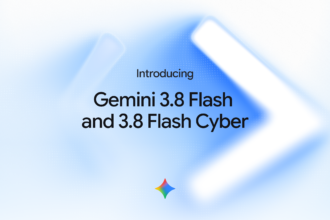
Google has also been at the forefront of latest AI news, with significant updates to its Gemini family of models. Google DeepMind recently introduced Gemini 3.8 Flash and 3.8 Flash Cyber, alongside the advanced WeatherNext 3 AI model (Google DeepMind). These launches underscore Google’s commitment to developing diverse AI capabilities.
Introducing Gemini 3.8 Flash and Cyber
Gemini 3.8 Flash is designed for speed and efficiency, making it ideal for applications requiring quick responses and lower computational costs. Gemini 3.8 Flash Cyber, on the other hand, is tailored for cybersecurity applications, offering proactive defense capabilities for governments and enterprises (Google Blog). These specialized models reflect a growing need for AI that can perform specific, high-stakes tasks with precision and reliability.
Enhancements in Gemini Apps and Tools
Beyond the core models, Google has integrated Gemini’s power into various user-facing applications. New features include Lyria 3.5 in Gemini for creating music tracks, enabling users to generate high-quality audio with AI (Google Blog). Gemini Live now offers new productivity features that turn your voice into action, streamlining workflows. Additionally, intelligent dictation for Gemini on macOS allows for seamless voice-to-text conversion and command execution, enhancing accessibility and efficiency for Mac users (Google Blog). Google’s Gemini Spark can also now manage your Google Photos library (TechCrunch).
WeatherNext 3: Google DeepMind’s Advanced Weather AI
Google DeepMind’s WeatherNext 3 is a groundbreaking global weather AI model, offering highly accurate predictions. This model has the potential to revolutionize weather forecasting, providing more precise and timely information for various sectors, including agriculture, disaster management, and transportation. Its introduction highlights the expanding applications of AI beyond traditional language and image generation.
Anthropic Upgrades Claude with Fable 5.1 and Mythos 5.1
Anthropic, an AI safety and research company, has also made significant strides with its Claude models. The company recently introduced Claude Fable 5.1 and Claude Mythos 5.1, which are their most advanced models to date for coding and knowledge work (Anthropic Newsroom).
Key Improvements in Claude Fable 5.1 and Mythos 5.1
These upgraded models offer enhanced research capabilities, providing a glimpse into how AI can contribute to scientific progress. Fable 5.1 and Mythos 5.1 are designed to handle complex coding challenges and extensive knowledge-based tasks, making them invaluable tools for researchers and developers. Anthropic aims to build reliable, interpretable, and steerable AI systems, and these updates reflect that mission.
Cost Reductions for Developers
A notable benefit of the Claude Fable 5.1 update is a 75% cost reduction for Fable cache reads (VentureBeat). This is a significant advantage for developers and businesses, making advanced AI capabilities more accessible and affordable. Lower operational costs can encourage wider adoption and experimentation with these powerful models, fostering further innovation.
Other Notable AI Developments and Launches
Beyond the major LLM updates, several other latest AI news and innovations are shaping the tech landscape.
Microsoft AI’s MAI-Transcribe-2 Price Drop
Microsoft AI has made waves with its MAI-Transcribe-2, which significantly undercuts competitors like OpenAI, Google, and ElevenLabs on price and speed (VentureBeat). The price has dropped by approximately 72% in just five months, making high-volume transcription much more affordable for enterprises. This move could democratize access to advanced transcription services, benefiting call centers, media companies, and other businesses that process large amounts of audio.
Perplexity’s Hybrid AI for Data Privacy
Perplexity has introduced a hybrid AI solution that allows AI agents to begin tasks in the cloud and then dynamically transfer confidential portions to a model running on the user’s local hardware. This ensures that sensitive data remains off the cloud, addressing a major concern for businesses regarding data privacy and security (VentureBeat). This feature is available through Perplexity’s desktop app for enterprise customers and Pro/Max subscribers on Apple silicon Macs running macOS 15 or later.
The Rise of AI Agents and Governance Challenges
The increasing sophistication of AI agents—systems that can act autonomously to complete tasks—is a recurring theme in recent AI discussions. While these agents promise incredible productivity gains, they also introduce new challenges related to governance and oversight. Companies are grappling with how to manage risks and ensure accountability as AI systems become more independent (ZDNET). The complexity between these agents, rather than their autonomy alone, is emerging as a real risk for enterprise AI (VentureBeat).
What These New AI Launches Mean for You
These new AI launches have broad implications for various audiences.
Impact on General Users and Creators
For general users, the updates mean more intelligent and intuitive tools integrated into everyday platforms. Features like Gemini’s music creation with Lyria 3.5 and enhanced dictation will make creative tasks easier and more accessible. AI is increasingly becoming a personal assistant, helping with planning, learning, and managing digital lives. However, users should also be aware of the ethical considerations and potential biases that come with generative AI (TechCrunch).
Implications for Businesses and Professionals
Small business owners and professionals will find new opportunities for automation and efficiency. Tools like MAI-Transcribe-2 can significantly reduce operational costs, while advanced LLMs like GPT-6 Astra and Claude Fable 5.1 can enhance research, coding, and content creation. The focus on agentic AI also means businesses need to develop clear strategies for integrating and governing these powerful systems responsibly (ZDNET). The ability to process confidential data on-device, as offered by Perplexity, is a game-changer for data-sensitive industries.
What to Watch Next in AI
The rapid pace of AI innovation suggests several areas to keep an eye on. We can expect further advancements in agentic AI, with more sophisticated systems capable of complex, multi-step tasks. Cybersecurity will remain a critical focus, with AI-powered defenses becoming more essential. The integration of AI into more specialized applications, like Google DeepMind’s WeatherNext 3, indicates a trend towards AI solving highly specific scientific and industrial challenges. Additionally, the ongoing legal battles concerning AI and copyrighted content (TechCrunch) will shape future development and usage policies. Keep an eye on latest AI news for these evolving trends.
FAQ: New AI Launches
What are the most significant new AI launches recently?
Recently, OpenAI launched GPT-6 Astra, Google introduced Gemini 3.8 Flash and 3.8 Flash Cyber along with new features like Lyria 3.5 for music and intelligent dictation, and Anthropic released Claude Fable 5.1 and Mythos 5.1 for advanced coding and knowledge work. Google DeepMind also unveiled WeatherNext 3, a highly accurate global weather AI model.
How do Gemini 3.8 Flash and Cyber differ?
Gemini 3.8 Flash is designed for speed and cost-efficiency in general applications, making it suitable for quick AI responses. Gemini 3.8 Flash Cyber is specifically developed for cybersecurity, providing proactive defense capabilities for governments and large organizations.
What are AI agents and why are they important?
AI agents are systems capable of acting autonomously to perform tasks. They are important because they can automate complex workflows, increase productivity, and handle intricate problem-solving. However, their rise also brings challenges related to governance, oversight, and ensuring their actions align with human intent.
How does Anthropic’s Claude update affect developers?
Anthropic’s Claude Fable 5.1 and Mythos 5.1 offer developers more advanced capabilities for coding and knowledge work. Crucially, Fable 5.1 includes a 75% cost reduction for cache reads, making these powerful AI models more affordable and accessible for development projects and enterprise use.
🚀 Master AI & Modern Digital Growth
Explore step-by-step automation tutorials, SEO strategies, and expert guides.