The artificial intelligence landscape is evolving at an incredible pace, with major players like Google and Anthropic consistently rolling out significant updates and entirely new AI model breakthroughs. These recent announcements bring enhanced capabilities, from more intuitive personal assistants to specialized tools for creative and professional tasks, signaling a new era of practical AI integration. Understanding these developments is key for anyone looking to leverage the power of AI.
In a nutshell, Google has expanded its Gemini ecosystem with advanced app features and Android integration, while DeepMind continues to innovate with models like Gemma 4. Simultaneously, Anthropic has launched Claude Opus 4.7, offering superior performance, and introduced Claude Design for visual collaboration. These latest AI news updates highlight a competitive and rapidly advancing field, promising more intelligent and accessible AI for a general audience.
Table of Contents
- Key Takeaways
- Google’s Latest AI Innovations
- Anthropic’s Advancements with Claude
- Broader AI Landscape: Other Notable Developments
- Why These New AI Launches Matter to You
- Navigating the Rapid AI Evolution
- What to Watch Next in AI
- FAQ About New AI Launches
Key Takeaways
- Google’s Gemini Expansion: New features in the Gemini app allow for note digitization, file generation, and Gemini-powered dictation in Gboard, enhancing Android’s intelligence.
- DeepMind’s Gemma 4: Google DeepMind has launched Gemma 4, described as a highly capable open model, and is exploring AI for healthcare and climate impact.
- Anthropic’s Claude Opus 4.7: This latest update to Claude offers stronger performance across coding, agents, vision, and multi-step tasks, with improved thoroughness and consistency.
- Claude Design Introduced: Anthropic Labs launched Claude Design, enabling users to collaborate with Claude on visual work like prototypes and slides.
- Diverse AI Applications: The AI legal services industry is heating up, Meta AI is being tested in Threads, and new AI voice and design tools are emerging, showcasing the widespread impact of a new launch in AI.
Google’s Latest AI Innovations
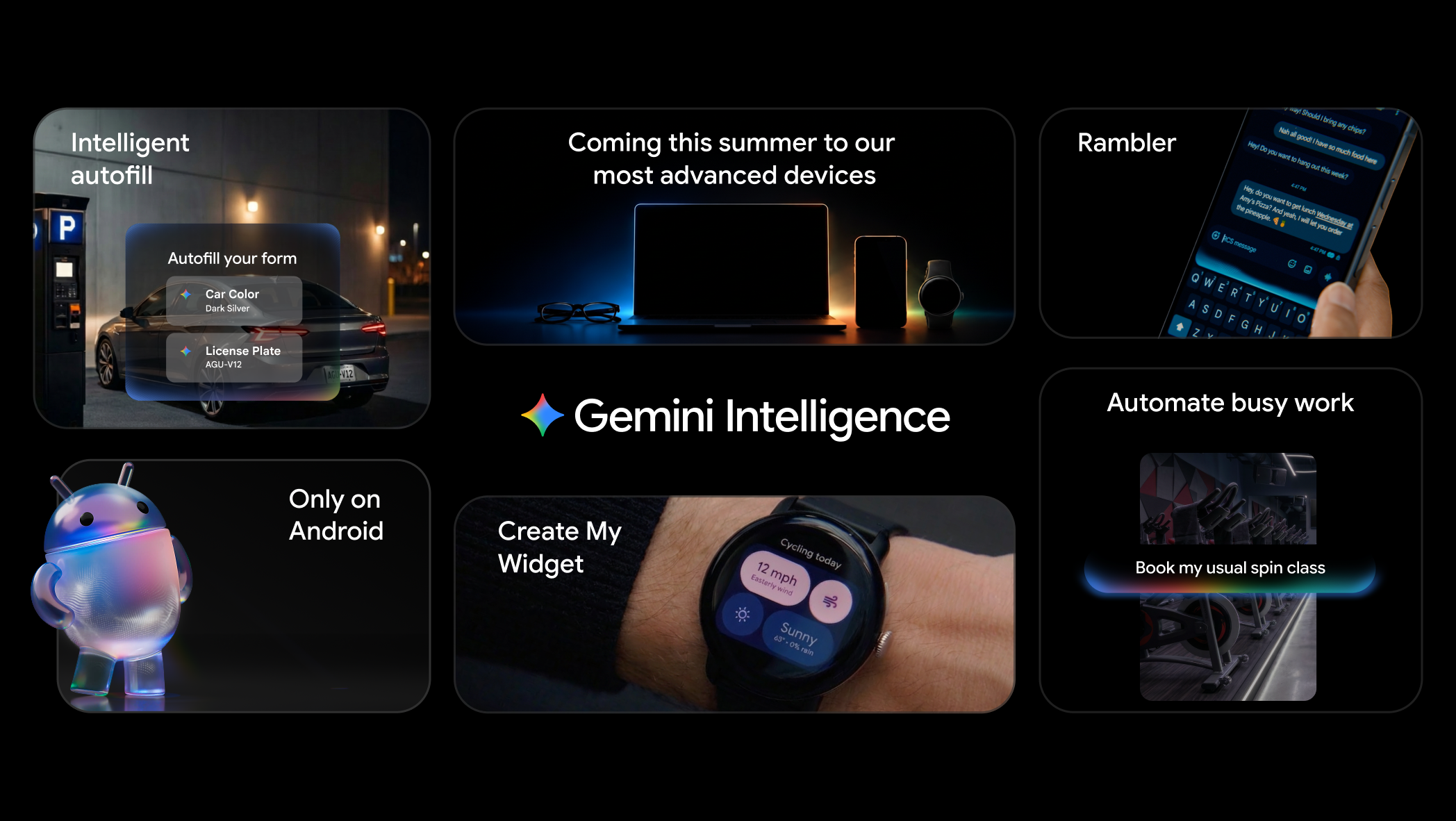
Google continues to be a driving force in the artificial intelligence space, with several key announcements expanding the reach and capabilities of its AI models. The official Gemini news and updates highlight significant enhancements to the Gemini app, making it more versatile for daily use. Users can now easily digitize paper notes and generate various files directly within Gemini. Furthermore, Google has integrated Gemini-powered dictation into Gboard, which could reshape how we interact with our devices and potentially challenge existing dictation startups, as reported by TechCrunch. Android is also becoming smarter and more proactive with “Gemini Intelligence,” bringing advanced AI features directly to users’ phones. Latest Gemini AI updates also include Gemini Embedding 2 becoming generally available and Gemini 3.1 Flash TTS offering the next generation of expressive AI speech.
Beyond consumer-facing applications, Google DeepMind is pushing the boundaries of AI research. They’ve launched Gemma 4, touted as a highly capable open model, and are developing AlphaEvolve, a Gemini-powered coding agent designed to scale impact across various fields. DeepMind is also exploring innovative applications like an AI co-clinician for healthcare and studies on how AI can reduce the climate impact of air travel, demonstrating a commitment to responsible AI development (Source: Google DeepMind News, Google AI Blog).
Anthropic’s Advancements with Claude
Anthropic, an AI safety and research company, has also made waves with its recent announcements. The introduction of Claude Opus 4.7 marks a significant upgrade to their flagship model. This new iteration delivers stronger performance across a range of complex tasks, including coding, acting as an agent, processing vision, and handling multi-step instructions, with greater thoroughness and consistency (Source: Anthropic Newsroom). This improved LLM updates means Claude can tackle more intricate problems with higher reliability.
Adding to its portfolio, Anthropic Labs has launched Claude Design, a new product aimed at creative professionals. Claude Design allows users to collaborate with Claude to create polished visual work such as designs, prototypes, slides, and one-pagers. This tool is set to streamline creative workflows and make design more accessible. Anthropic is also expanding its reach through strategic partnerships, including collaborations with Amazon Web Services and a compute deal with SpaceX, indicating a robust growth strategy for their AI capabilities.
Broader AI Landscape: Other Notable Developments
The impact of a new launch in AI extends beyond the major model developers. The AI legal services industry, for instance, is experiencing rapid growth, with Anthropic itself entering the action, highlighting AI’s increasing role in specialized professional sectors (Source: TechCrunch AI News). Social media platforms are also integrating AI more deeply; Threads is testing a Meta AI integration that functions similarly to Grok, aiming to enhance user experience.
Furthermore, the ecosystem of AI tools is expanding with new startups gaining significant traction. Dessn recently raised $6M for its production-focused design tool, and AI voice startup Vapi achieved a $500M valuation after securing a deal with Amazon Ring over numerous competitors. These developments underscore the diverse applications and commercial potential of artificial intelligence and machine learning technology across various industries.
Why These New AI Launches Matter to You
These recent AI launches aren’t just technical advancements; they have practical implications for general readers, creators, small business owners, and professionals. Here’s why they matter:
- Enhanced Productivity: Tools like Gemini’s file generation and Gboard dictation can significantly streamline everyday tasks, saving time and effort for students and professionals.
- New Creative Possibilities: Claude Design and Dessn’s production-focused tool open up new avenues for creators to generate visual content more efficiently and effectively.
- Industry-Specific Impact: The emergence of AI in legal services and the development of AI co-clinicians demonstrate how AI is transforming specialized fields, making complex tasks more manageable and potentially improving outcomes.
- Accessibility: As AI becomes more integrated into platforms like Android and Threads, it becomes more accessible to a broader audience, reducing the technical barrier to entry.
These innovations mean that whether you’re managing a small business, studying, or creating content, there’s likely a new launch in AI that can offer tangible benefits.
Navigating the Rapid AI Evolution
The world of AI is moving quickly, and staying informed is crucial. For those interested in harnessing these powerful tools, it’s important to focus on practical applications and how they can solve real-world problems. Don’t get lost in the technical jargon; instead, look for clear explainers and guides that show you how to use or evaluate these updates effectively. HealingPoint aims to provide clear, helpful, and current updates without technical noise, making it easier for you to understand what’s happening and why it matters.
Keeping an eye on reliable sources like TechCrunch and Google’s official blogs can provide valuable insights into the latest developments. Remember, the goal is to leverage AI to enhance your work and life, not to be overwhelmed by its complexity.
What to Watch Next in AI
The rapid pace of AI innovation suggests several areas to keep an eye on:
- Continued LLM Competition: The rivalry between Google’s Gemini, OpenAI’s ChatGPT, Anthropic’s Claude, and others will drive further advancements in language understanding and generation. Expect more powerful and specialized LLM updates.
- Deeper Integration: AI will likely become even more seamlessly integrated into operating systems, productivity suites, and everyday devices, making it an invisible yet powerful assistant.
- Ethical Considerations: As AI becomes more capable, discussions around ethical AI use, data privacy, and potential biases will intensify, shaping future regulations and development.
- Specialized AI Automation Tools: Look for more industry-specific AI tools designed to automate complex workflows in areas like finance, healthcare, and creative industries.
- Agentic AI: Google is already bringing agentic AI to Android, which suggests a future where AI systems can act more autonomously to complete multi-step tasks for users.
Staying curious and informed will help you make the most of this transformative technology.
FAQ About New AI Launches
What is the bottom line on new launch in AI?
The bottom line is that AI development is accelerating, with major companies like Google and Anthropic releasing more powerful, versatile, and integrated tools. These launches are expanding AI’s capabilities across various sectors, from enhancing personal productivity and creativity to transforming healthcare and legal services, making AI more accessible and impactful than ever before.
Who is a new launch in AI best for or most relevant to?
New AI launches are relevant to a broad audience: general users benefiting from smarter devices and apps, creators using AI for design and content generation, small business owners looking for automation and efficiency, students leveraging AI for learning and research, and professionals in fields like legal and healthcare who can utilize specialized AI assistants.
What are the main benefits and risks of new launch in AI?
Benefits: Increased productivity, enhanced creativity, streamlined workflows, improved accessibility to advanced tools, and potential for solving complex societal problems (e.g., climate impact, healthcare). Risks: Ethical concerns around data privacy and bias, potential job displacement in some sectors, the need for robust security measures, and the challenge of keeping up with rapid technological change.
How does a new launch in AI compare with alternatives?
The current landscape features intense competition among leading AI models like Google’s Gemini, Anthropic’s Claude, and OpenAI’s ChatGPT. Each new launch often brings improvements in specific areas like multimodal capabilities, coding performance, or specialized applications (e.g., Claude Design for visual work). Users often choose based on specific needs, integration with existing ecosystems (e.g., Google’s Android integration), or performance on particular tasks.
What should readers check before deciding on a new launch in AI?
Before adopting a new AI tool or model, readers should consider its specific features and how they align with their needs, evaluate its performance and reliability through reviews or trials, understand its privacy policy and data handling practices, assess its cost and accessibility, and stay informed about any known limitations or ethical considerations. It’s also wise to check for community support and ease of integration with your current tools.