The world of Artificial Intelligence is constantly evolving, with new Large Language Models (LLMs) emerging at a rapid pace. These “latest LLM” advancements are more than just technical jargon; they represent powerful new capabilities that can transform how we work, create, and interact with technology. For general readers, creators, small business owners, and professionals, understanding these updates is key to harnessing their potential.
At HealingPoint, we cut through the technical noise to bring you clear, helpful insights into these digital trends. This guide will explain what the latest LLMs are, why they matter, and how you can evaluate and use them effectively in your daily life and business endeavors. We’ll also look at what to watch for next in this exciting field, helping you stay ahead of the curve.
Table of Contents
- What Are the Latest LLM Updates?
- Why These New AI Models Matter for Everyone
- Key Features to Look For in the Newest LLMs
- How to Leverage Latest LLMs in Your Work and Business
- Navigating the Risks and Limitations of Emerging AI
- What to Watch Next in the World of LLM Updates
- FAQ: Understanding the Latest LLMs
What Are the Latest LLM Updates?
The term “latest LLM” refers to the most recent iterations and breakthroughs in Large Language Models – powerful AI systems trained on vast amounts of text data. These models can understand, generate, and process human language in sophisticated ways. Recent developments often focus on improving accuracy, speed, multimodal capabilities (handling text, images, and sometimes audio), and efficiency. Developers are constantly refining these models to make them more versatile and accessible, pushing the boundaries of what AI can achieve.
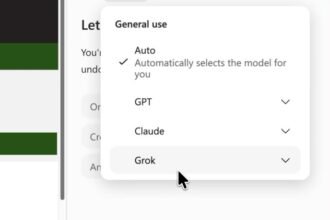
For instance, recent latest AI news often highlights advancements in models like Google’s Gemini, OpenAI’s GPT series, and Anthropic’s Claude. Each update brings enhancements in areas such as reasoning, coding, and creative content generation. These improvements mean that AI tools are becoming more capable of handling complex tasks, offering more nuanced responses, and integrating seamlessly into various applications.
Why These New AI Models Matter for Everyone
The continuous stream of latest LLM updates holds significant implications across various sectors. For individuals, these models can act as personal assistants, helping with everything from drafting emails to brainstorming creative ideas. Students can use them for research assistance, while professionals can leverage them for data analysis and report generation.
For small business owners and creators, these new AI model breakthroughs offer unprecedented opportunities. Imagine automating customer service inquiries, generating marketing copy, or even designing initial product concepts with the help of an advanced AI. These tools can level the playing field, allowing smaller entities to compete with larger organizations by boosting productivity and innovation without requiring extensive technical expertise. They enable faster content creation, more efficient data processing, and personalized user experiences, directly impacting bottom lines and creative output.
Key Features to Look For in the Newest LLMs
When evaluating the latest LLM offerings, it’s important to look beyond the hype and focus on features that provide practical value. Here are some key aspects to consider:
- Multimodality: Can the model process and generate content across different formats, such as text, images, and even code? This versatility is becoming increasingly important.
- Contextual Understanding: How well does the LLM maintain context over longer conversations or complex documents? Better contextual understanding leads to more coherent and useful outputs.
- Reasoning Capabilities: Does the model demonstrate strong logical reasoning, problem-solving, and analytical skills? This is crucial for tasks requiring critical thinking.
- Customization and Fine-tuning: Can the model be easily adapted or fine-tuned for specific industry needs or personal preferences?
- Safety and Ethical Guardrails: Are there robust mechanisms in place to prevent the generation of harmful, biased, or misleading content?
- Speed and Efficiency: How quickly does the model generate responses, and what are its computational requirements? Faster, more efficient models are often more practical for real-world applications.
By assessing these features, you can better determine which of the latest LLM advancements align best with your specific needs and goals.
How to Leverage Latest LLMs in Your Work and Business
Integrating the latest LLM technologies into your workflow can unlock significant efficiencies and creative possibilities. Here are practical ways to use them:
- Content Creation: Generate blog posts, social media updates, email newsletters, and even scripts. LLMs can help overcome writer’s block and speed up content production.
- Customer Support: Implement AI-powered chatbots for instant responses to common customer queries, freeing up human agents for more complex issues.
- Data Analysis and Summarization: Quickly extract key insights from large datasets or summarize lengthy reports, saving valuable time.
- Coding Assistance: Developers can use LLMs to generate code snippets, debug programs, or translate code between different languages.
- Personalized Learning: Create custom learning materials, explain complex topics, or even practice new languages with an AI tutor.
- AI Automation Tools: Combine LLMs with other automation tools to streamline repetitive tasks, manage schedules, and improve overall operational efficiency.
The key is to experiment and identify specific pain points or opportunities where AI can provide a tangible benefit. Start small, test different models, and gradually integrate them into your processes.
Navigating the Risks and Limitations of Emerging AI
While the latest LLM advancements offer immense potential, it’s crucial to approach them with a clear understanding of their limitations and potential risks. These models, despite their sophistication, are not infallible. They can sometimes generate inaccurate information, also known as “hallucinations,” or perpetuate biases present in their training data. Ethical concerns around data privacy, intellectual property, and job displacement are also ongoing discussions within the tech community, as reported by sources like Reuters.com.
Users should always critically review AI-generated content, especially for factual accuracy and sensitivity. Understanding that LLMs are tools, not sentient beings, helps in setting realistic expectations. It’s essential to implement human oversight and develop clear guidelines for AI usage within any organization to mitigate these risks effectively. Being aware of these challenges allows for more responsible and beneficial adoption of new AI models.
What to Watch Next in the World of LLM Updates
The pace of innovation in LLMs shows no signs of slowing down. Looking ahead, we can anticipate several key trends that will shape the future of AI:
- Increased Specialization: Expect more domain-specific LLMs tailored for particular industries like healthcare, finance, or legal, offering deeper expertise.
- Enhanced Multimodal AI: Further integration of various data types, leading to AI that can better understand and generate across text, images, video, and audio seamlessly.
- Improved Efficiency and Accessibility: Models will likely become smaller, faster, and more energy-efficient, making them more accessible for deployment on personal devices and in resource-constrained environments.
- Better Ethical AI Frameworks: Ongoing efforts to develop stronger ethical guidelines and technical solutions to address biases, ensure fairness, and protect user privacy will be critical.
- Personalized AI Agents: The rise of highly personalized AI agents that learn individual preferences and proactively assist with tasks across different platforms.
Keeping an eye on these developments, including latest Gemini AI updates, will help you prepare for the next wave of AI innovation and leverage its power effectively.
FAQ: Understanding the Latest LLMs
What is an LLM?
An LLM, or Large Language Model, is a type of artificial intelligence program designed to understand, generate, and interact with human language. It’s trained on massive datasets of text and code, allowing it to perform tasks like answering questions, writing essays, summarizing documents, and even generating creative content.
How do I know which latest LLM is right for me?
Choosing the right LLM depends on your specific needs. Consider what tasks you want to accomplish (e.g., writing, coding, image generation), your budget, and whether you need on-premise or cloud-based solutions. Research different models’ strengths, review their features, and try out free versions or trials if available to see which one performs best for your use cases.
Are latest LLMs safe to use?
While LLMs offer powerful capabilities, they come with considerations for safety and ethics. They can sometimes generate incorrect or biased information, and there are concerns about data privacy. It’s important to use them responsibly, verify critical information, and be aware of the terms of service for any platform you use. Many developers are actively working to build in stronger safety guardrails.
What’s the difference between an LLM and generative AI?
An LLM is a specific type of generative AI. Generative AI is a broader category of AI that can create new content, such as text, images, audio, or video. LLMs specialize in generating text-based content, making them a powerful subset of the larger generative AI field. All LLMs are generative AI, but not all generative AI models are LLMs (e.g., an AI that generates images is generative AI but not an LLM).