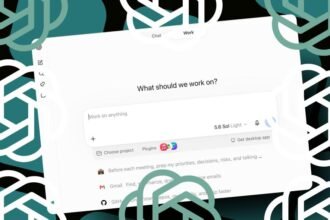
The world of artificial intelligence is moving at an incredible pace, with major players like OpenAI, Google, and Anthropic constantly rolling out new AI model breakthroughs. These advancements are not just technical feats; they are reshaping how we work, create, and interact with technology. From AI assistants managing personal finances to sophisticated coding agents, understanding these updates is key for anyone looking to stay ahead in the digital age.
This article will cut through the technical noise to explain the latest developments, why they matter to you, and what to keep an eye on next. We’ll explore recent innovations from leading AI companies and discuss the practical implications for general users, creators, and small business owners.
Table of Contents
- Quick Answer: Key AI Model Updates
- The Current Landscape of New AI Model Development
- Why These New AI Models Matter for You
- Navigating the Risks and Limitations of New AI Models
- What to Watch Next in the World of New AI Models
- FAQ: Understanding New AI Models
Quick Answer: Key AI Model Updates
Recent developments in AI models highlight a push towards more specialized, integrated, and capable systems. OpenAI has launched ChatGPT for personal finance and is bringing Codex to phones. Google’s Gemini continues to expand its multimodal capabilities, including digitizing notes and generating files, alongside DeepMind’s AlphaEvolve coding agent and Gemini 3.1 Flash TTS. Anthropic has released Claude Opus 4.7 with enhanced performance across various tasks and introduced Claude Design for visual collaboration, emphasizing an ad-free experience. These updates collectively aim to make AI more practical, powerful, and accessible for diverse applications.
The Current Landscape of New AI Model Development
The artificial intelligence landscape is in a constant state of evolution, with leading companies pushing the boundaries of what’s possible. Generative AI, including large language models (LLMs), text-to-image, and text-to-video models, is driving significant change across the technology industry. Major players are not just refining existing models but are launching entirely new AI model capabilities that promise to transform various sectors.
OpenAI’s Latest Innovations
OpenAI continues to be at the forefront of AI development. Recently, they launched ChatGPT for personal finance, allowing users to connect bank accounts for tailored financial insights. This move signifies a trend towards highly specialized AI applications that can handle sensitive personal data, raising both excitement and questions about privacy. Additionally, OpenAI announced that Codex, their AI model for converting natural language to code, is coming to phones, making advanced coding assistance more mobile and accessible. These developments, as reported by TechCrunch and OpenAI’s newsroom, underscore a strategic expansion into practical, everyday use cases for their powerful models. Source: OpenAI News
Google & DeepMind’s Advancements
Google and its AI research subsidiary, DeepMind, are heavily invested in advancing their Gemini models. The latest Gemini AI updates include new features for the Gemini app, such as the ability to digitize paper notes and easily generate files. The Gemini API File Search is now multimodal, allowing developers to build more efficient and verifiable Retrieval-Augmented Generation (RAG) systems. Google DeepMind has also introduced AlphaEvolve, a Gemini-powered coding agent designed to scale impact across various fields, and Gemini 3.1 Flash TTS, the next generation of expressive AI speech. These innovations, detailed on the Google AI Blog and Google DeepMind’s blog, highlight Google’s commitment to creating versatile and powerful AI systems for both consumers and developers. Source: Google Blog, Source: Google DeepMind News
Anthropic’s Claude: Performance & Practical Tools
Anthropic, known for its focus on AI safety, has introduced Claude Opus 4.7. This latest Opus model delivers stronger performance across coding, agentic tasks, vision, and multi-step processes, offering greater thoroughness and consistency. A notable new product is Claude Design, which allows users to collaborate with Claude to create visual work like designs, prototypes, and slides. Anthropic is also making strides in business applications, with PwC deploying Claude for enterprise functions and the launch of Claude for Small Business. The company has also publicly committed to keeping Claude ad-free, aiming to maintain user trust, as reported in their newsroom. Source: Anthropic Newsroom, Source: ZDNET
Why These New AI Models Matter for You
These rapid advancements in AI models are not just for tech enthusiasts; they have tangible impacts on general readers, creators, small business owners, students, and professionals alike. The continuous evolution of these models means more powerful tools are becoming available, changing how we approach daily tasks and long-term projects.
Enhanced Productivity & Automation
The introduction of specialized AI models, like ChatGPT for personal finance or Claude’s capabilities for contract analysis, means that complex tasks can be streamlined. For small business owners and professionals, this translates into significant time savings and improved efficiency. Imagine an AI assistant that can manage your budget, draft emails, or even help secure contracts, all with greater accuracy and speed. These tools are becoming essential for AI automation tools in various industries.
New Creative Possibilities
For creators, models like Anthropic’s Claude Design open up new avenues for visual collaboration, allowing for the rapid generation of prototypes and designs. Google’s multimodal Gemini capabilities can assist in generating files or even analyzing videos, providing new ways to interact with and produce content. These tools democratize access to advanced creative processes, enabling more people to bring their ideas to life without needing specialized technical skills.
Improved Accessibility & Integration
The trend towards integrating AI models into everyday devices, such as OpenAI’s Codex coming to phones or Google’s Gemini Intelligence on Android, makes AI more accessible than ever. As AI becomes a built-in feature of our operating systems and applications, it will seamlessly assist with tasks, from smart search functions to personalized recommendations. This widespread integration means AI is becoming a fundamental part of the user experience, making technology more intuitive and helpful.
Navigating the Risks and Limitations of New AI Models
While the benefits of new AI models are clear, it’s crucial to acknowledge the inherent risks and limitations. As AI becomes more sophisticated and integrated into our lives, new challenges emerge that require careful consideration.
Ethical Considerations & Safety
The rapid advancement of AI raises significant ethical questions. Concerns about