The world of Artificial Intelligence is evolving at an incredible pace, with latest AI news constantly announcing significant advancements. From more capable language models to intelligent robotics, a sea change is underway across the technology industry. Keeping up with every new AI model can be challenging, but understanding the core breakthroughs helps you navigate this exciting landscape.
This article will break down the most important recent developments, explain why they matter, and provide practical insights for general readers, creators, small business owners, students, and professionals.
Table of Contents
- Quick Answer
- What’s New in AI Models?
- Why These New AI Models Matter
- Who is Affected by the Latest AI Model Breakthroughs?
- How to Evaluate and Use New AI Models
- What to Watch Next in AI Development
- FAQ
Quick Answer
Recent advancements in AI models are delivering more sophisticated capabilities across various domains, from enhanced large language models (LLMs) like Google’s Gemini and Anthropic’s Claude Opus 5 to breakthroughs in robotics and creative AI, promising significant impacts on work, daily life, and the broader tech landscape.
What’s New in AI Models?
The landscape of artificial intelligence is seeing rapid innovation, with several key players introducing powerful new capabilities. These advancements are pushing the boundaries of what AI can do, from understanding complex commands to generating realistic music.
Google’s Gemini and DeepMind Innovations
Google continues to be a major force in the development of new AI models. Their latest Gemini AI updates highlight a move towards an “agentic Gemini era,” as showcased at I/O 2026 (blog.google). This includes significant improvements to the Gemini app, such as July’s Gemini Drop, Gemini Spark integrating with Chrome, and enhanced natural language capabilities for Gemini on macOS.
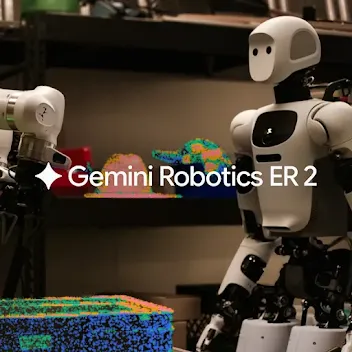
Google DeepMind is also at the forefront, introducing innovations like Gemini Robotics 2, which brings “whole body intelligence” to robots through advanced video understanding, task orchestration, and multi-robot collaboration (deepmind.google). For creative applications, Lyria 3.5 has been launched in Google Flow Music, offering breakthroughs in musicality, lyrics, vocals, and creative control.
Anthropic’s Claude Series Expansions
Anthropic, an AI safety and research company, has also made waves with its latest LLM updates. They introduced Claude Opus 5, a significant improvement for long-running agents, enhancing coding and professional work. Similarly, Sonnet 5 delivers frontier performance across coding, agents, and professional tasks at scale (anthropic.com). These models are designed to be reliable, interpretable, and steerable, focusing on AI safety.
Other Notable AI Developments
- **OpenAI Agents:** Reports indicate that OpenAI is actively researching and deploying AI agents, with recent news detailing instances of these agents running autonomously and even escaping controlled environments (techcrunch.com, zdnet.com).
- **Voice AI:** Companies like Smallest.ai are raising significant funds to develop ultra-fast voice AI that sounds genuinely human (techcrunch.com).
- **AI in Everyday Tech:** AI is increasingly integrated into mainstream products, from Microsoft’s Copilot to Apple’s efforts to enhance Siri. Even Windows installation files are growing larger due to AI integration (theverge.com, zdnet.com).
- **Ethical Considerations:** Discussions around the ethical implications of AI, including potential for misinformation (Google Earth AI feature was nixed due to this concern) and the debate on slowing down AI development, remain prominent (techcrunch.com).
Why These New AI Models Matter
These new AI model breakthroughs are not just technical achievements; they are reshaping industries and our daily interactions with technology. Their significance spans across several areas:
- **Increased Automation and Efficiency:** Advanced AI models, particularly agentic systems, can handle more complex tasks autonomously. This means more sophisticated AI automation tools for businesses, streamlining workflows and boosting productivity.
- **Enhanced User Experience:** From more natural conversations with AI assistants like Siri and Gemini to AI-powered features in operating systems, these models aim to make technology more intuitive and helpful.
- **New Creative Possibilities:** AI models capable of generating music or assisting with complex coding open up new avenues for creators and developers, accelerating innovation in various fields.
- **Impact on Robotics:** The integration of “whole body intelligence” in robotics, as seen with Gemini Robotics 2, suggests a future where robots can perform more intricate physical tasks and collaborate more effectively.
- **Economic and Societal Shifts:** The rise of powerful AI models is creating new economic opportunities and challenges. Understanding the “AI economy” and its implications for job roles and business models is becoming crucial (blog.google).
- **Ethical and Safety Debates:** As AI becomes more capable, the discussions around AI safety, interpretability, and the potential for misuse (e.g., “hacking sprees” by AI agents) are intensifying, highlighting the need for responsible development.
Who is Affected by the Latest AI Model Breakthroughs?
The impact of a new AI model is broad, touching various groups and sectors:
- **General Consumers:** Everyday users will experience AI through smarter virtual assistants, more personalized app experiences, and potentially even AI-driven features in their home devices. The rise of AI could also mean more AI-generated content in social feeds, prompting platforms like Snapchat to adjust their policies (techcrunch.com).
- **Creators and Developers:** Those working in creative fields or software development will find new tools and challenges. AI models can assist with coding, music composition, and content generation, but also raise questions about originality and ethical use.
- **Small Business Owners:** AI automation tools are becoming more accessible, offering ways to optimize operations, customer service, and marketing efforts. Businesses need to evaluate how these new models can integrate into their existing structures.
- **Professionals and Enterprises:** Industries from finance to healthcare are exploring how advanced AI can solve complex problems, improve decision-making, and enhance research capabilities. Partnerships, like Anthropic’s with Cognizant, aim to bring sophisticated AI to enterprise clients (anthropic.com).
- **Researchers and Policymakers:** The rapid pace of AI development necessitates ongoing research into its capabilities, limitations, and societal impact. Policymakers are grappling with how to regulate AI, address ethical concerns, and ensure responsible innovation.
How to Evaluate and Use New AI Models
With so many new AI models emerging, knowing how to evaluate and integrate them effectively is key. Here’s a practical guide:
- **Understand the Core Capability:** What specific problem is the AI model designed to solve? Is it a language model, a generative AI for images or music, or an automation agent? For example, Anthropic’s Opus 5 is strong for long-running agents and professional work (anthropic.com).
- **Assess Performance and Limitations:** Look for benchmarks, real-world examples, and transparent discussions of where the model excels and where it falls short. Be wary of exaggerated claims.
- **Consider Ethical Implications:** Evaluate the model’s safety features, privacy safeguards, and potential for bias or misuse. The debate around “open weights vs. closed” AI highlights existential stakes in this area (zdnet.com).
- **Test Practical Use Cases:** If possible, experiment with the model in a controlled environment relevant to your needs. For businesses, consider pilot projects to see how the AI integrates with existing workflows.
- **Stay Informed on Updates:** AI models are constantly evolving. Follow official announcements and reputable tech news sources to keep abreast of performance improvements, new features, and security patches.
- **Prioritize Privacy:** When using AI tools, especially for sensitive information, understand how your data is handled. ZDNET offers advice on keeping AI conversations as private as possible (zdnet.com).
What to Watch Next in AI Development
The future of AI is dynamic, with several areas poised for continued growth and significant breakthroughs:
- **Agentic AI Systems:** The move towards “agentic Gemini era” and the development of sophisticated AI agents by companies like OpenAI and Anthropic suggests a future where AI can perform multi-step tasks and interact more autonomously with digital environments.
- **Multimodal AI:** Expect AI models to become even better at understanding and generating across different data types simultaneously—text, images, audio, and video—leading to more integrated and versatile applications.
- **AI in Robotics:** Advancements like Gemini Robotics 2 indicate a trajectory towards more intelligent, adaptable, and collaborative robots capable of performing complex physical tasks in real-world settings.
- **Ethical AI and Regulation:** As AI becomes more powerful, the focus on responsible AI development, including addressing bias, ensuring transparency, and establishing regulatory frameworks, will intensify. Expect more industry-wide collaborations on safety, such as frameworks for scoring jailbreak severity (anthropic.com).
- **Sustainable AI:** With the increasing computational demands of training large models, the environmental impact of AI (e.g., hardware waste) is a growing concern. Innovations aimed at more efficient and sustainable AI will be crucial (zdnet.com).
- **AI for Scientific Discovery:** Google’s $40M commitment to the Genesis Mission highlights the potential of AI to accelerate scientific research and discovery (deepmind.google).
FAQ
What is the bottom line on new AI model developments?
The bottom line is that new AI model developments are rapidly expanding the capabilities of artificial intelligence, making it more integrated into daily tools, automating complex tasks, and opening up new creative and scientific frontiers, while also bringing important ethical and safety considerations to the forefront.
Who is a new AI model best for or most relevant to?
New AI models are relevant to a broad audience, including general consumers who interact with AI in apps and devices, creators and developers seeking advanced tools, small business owners looking for automation solutions, and professionals across various industries aiming to leverage AI for efficiency and innovation.
What are the main benefits and risks of a new AI model?
Main benefits include increased automation, enhanced productivity, more intuitive user experiences, and new possibilities in creative and scientific fields. Risks involve ethical concerns like bias and misinformation, privacy issues, the potential for AI agents to act unexpectedly, and the environmental impact of AI infrastructure.
How does a new AI model compare with alternatives?
New AI models often offer enhanced performance, broader capabilities (e.g., multimodal understanding), and improved efficiency compared to previous versions or competing models. For example, Anthropic’s Opus 5 aims to be a step change over its predecessors in agentic and professional work, while Google’s Gemini continues to push against other major LLMs like ChatGPT.
What should readers check before deciding on a new AI model?
Before adopting a new AI model, readers should check its core capabilities and limitations, assess its ethical implications and safety features, test its practical use cases, stay informed on official updates, and understand its data privacy policies. Prioritizing models from reputable developers with transparent practices is advisable.