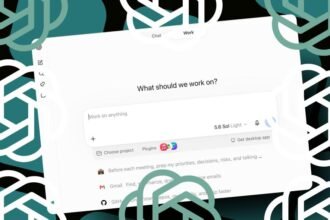

The world of Artificial Intelligence is experiencing rapid advancements, with major players like OpenAI, Google, and Anthropic consistently introducing significant updates and latest AI news. These new launches in AI are not just incremental improvements; they represent shifts in capability, hardware, and even policy, impacting everyone from general users to large enterprises. Understanding these developments is key to navigating the evolving digital landscape.
From groundbreaking new AI models to innovative chip designs and agentic AI tools, the pace of innovation is breathtaking. This article breaks down the most important recent launches and updates, explaining what they are, why they matter, and who they affect.
Table of Contents
- Quick Facts: Key AI Launches at a Glance
- What’s New in the World of AI?
- Why These AI Launches Matter
- Who Is Affected by the Latest AI Updates?
- Navigating the New AI Landscape: What to Watch Next
- FAQ: Understanding the Latest AI Launches
Quick Facts: Key AI Launches at a Glance
- OpenAI: Faced government requests to slow GPT-5.6 rollout due to safety concerns and is developing its own ‘Jalapeño’ inference chip. The company also made strategic hires, including an Apple Vision Pro executive and Uber India’s chief, signaling an expansion of its hardware and global market focus.
- Google/DeepMind: Ushered in the ‘agentic Gemini era’ with the launch of Gemini Omni and Gemini 3.5 Flash, featuring advanced ‘computer use’ capabilities and proactive assistance. They also introduced DiffusionGemma for 4x faster text generation and the Interactions API for developers.
- Anthropic: Received a US government directive to suspend access to Fable 5 and Mythos 5, highlighting regulatory scrutiny. They launched Claude Tag, an agentic AI coworker for Slack, and forged new partnerships with companies like TCS and DXC to integrate Claude into regulated industries.
- Overall Trend: A clear move towards more autonomous, ‘agentic’ AI systems and a significant push into developing proprietary AI hardware to reduce dependency on external chip manufacturers.
What’s New in the World of AI?
The past few months have been bustling with significant AI model breakthroughs and strategic moves from the leading AI developers. These are the details you need to know:
OpenAI’s Strategic Shifts and Hardware Ambitions
OpenAI, a frontrunner in generative AI, recently encountered a pivotal moment with its GPT-5.6 rollout. The company faced requests from the US government to slow down the release, citing safety concerns. This incident underscores the growing tension between rapid AI innovation and the need for responsible development and regulatory oversight. Beyond software, OpenAI is making a bold move into hardware by developing its own ‘Jalapeño’ inference chip. This initiative aims to reduce its reliance on external chip manufacturers, primarily Nvidia, and optimize performance for its large language models. Furthermore, OpenAI has been actively expanding its leadership, notably poaching an Apple Vision Pro executive and Uber India’s chief, indicating a broadening scope beyond core research into product development and international markets.
Google’s Agentic Leap with Gemini
Google, through its DeepMind division, has declared the advent of the ‘agentic Gemini era.’ This signifies a major shift towards AI systems that can not only understand and generate information but also proactively assist users and perform complex tasks autonomously. Key to this is the launch of Gemini Omni and Gemini 3.5 Flash. Gemini 3.5 Flash, in particular, introduces advanced ‘computer use’ capabilities, allowing the AI to interact with software and systems more directly. The Gemini app itself is becoming more agentic, offering proactive, 24/7 help to users. For developers, Google has released the Interactions API, providing a primary interface for building with Gemini models and agents. Additionally, Google announced DiffusionGemma, a new model that promises 4x faster text generation, pushing the boundaries of creative and efficient AI content creation.
Anthropic’s Regulatory Challenges and Enterprise Focus
Anthropic, known for its focus on AI safety, has also been in the spotlight. The company faced a significant development when the US government issued an export control directive to suspend access to its Fable 5 and Mythos 5 models. This decision highlights the increasing geopolitical and ethical considerations surrounding advanced AI technologies. Despite these challenges, Anthropic is pushing forward with practical applications, notably launching Claude Tag. This new feature allows Claude to act as an agentic AI coworker within Slack, streamlining workflows and enhancing team collaboration. Anthropic is also actively expanding its reach into regulated industries through strategic partnerships with major IT service providers like TCS and DXC, aiming to integrate Claude into critical enterprise systems.
Why These AI Launches Matter
These recent developments are more than just tech headlines; they signal fundamental shifts with far-reaching implications:
Accelerated Innovation and Competition
The intense competition between OpenAI, Google, and Anthropic is driving unprecedented innovation. Each LLM update and new launch in AI pushes the others to develop more capable, efficient, and user-friendly models. This benefits everyone by bringing more advanced tools to market faster.
The Rise of Agentic AI
The emphasis on ‘agentic’ capabilities, particularly from Google’s Gemini and Anthropic’s Claude Tag, is transformative. Agentic AI moves beyond simple query-response systems to models that can plan, execute, and adapt to complex tasks with minimal human intervention. This paves the way for truly intelligent assistants and AI automation tools that can handle multi-step processes across various applications.
Hardware Independence and Performance
OpenAI’s venture into custom AI chips with ‘Jalapeño’ is a significant strategic move. By designing their own hardware, AI companies can tailor chips specifically for their models, potentially achieving greater efficiency, lower latency, and reduced operational costs. This also lessens their dependence on a few dominant chip manufacturers, fostering a more diverse and resilient AI infrastructure.
Ethical and Regulatory Scrutiny
The government’s intervention in OpenAI’s GPT-5.6 rollout and the directive concerning Anthropic’s models underscore the growing global concern about AI safety, ethics, and potential misuse. This increased scrutiny will likely lead to more robust regulatory frameworks and a greater emphasis on