The world of artificial intelligence is evolving at an incredible pace, with major players consistently launching a new AI model or significant update. These advancements are reshaping how we interact with technology, offering powerful new capabilities for everyday users, creators, and businesses alike. From more intelligent chatbots to advanced creative tools, understanding these breakthroughs is key to navigating the digital landscape. This article will break down the latest developments, explain why they matter, and provide practical insights into what to expect next.
Table of Contents
- Quick Snapshot: Latest AI Model Breakthroughs
- Why These New AI Models Matter Now
- Key Players & Their Latest AI Model Innovations
- Anthropic’s Claude Opus 4.7 & Claude Design
- Google’s Agentic Gemini Era: Omni & 3.5
- OpenAI & Other Developments
- Practical Implications for Users and Businesses
- Risks and Limitations of Emerging AI Models
- What to Watch Next in the World of New AI Models
- FAQ: Your Questions About New AI Models Answered
Quick Snapshot: Latest AI Model Breakthroughs
The landscape of artificial intelligence is currently experiencing a significant shift, driven by the introduction of several powerful new AI models. Anthropic recently unveiled Claude Opus 4.7, boasting enhanced performance across complex tasks like coding, agentic workflows, vision, and multi-step reasoning. Simultaneously, Google is pushing its “agentic Gemini era” with new models like Gemini Omni and Gemini 3.5, designed for proactive assistance and advanced functionalities, including file generation and scientific discovery tools. These developments highlight a trend towards more capable, versatile, and autonomous AI systems that are moving beyond simple conversational tasks to become active problem-solvers. For the latest general updates, you can check sources like Reuters Technology and TechCrunch AI News.
Why These New AI Models Matter Now
Artificial intelligence is no longer a futuristic concept; it’s a fundamental part of our daily lives, driving a “sea change” across nearly every sector of the technology industry, as noted by The Verge. These new AI models are not just incremental improvements; they represent a leap in capability that affects a broad audience, from general users to creators, small business owners, students, and professionals. They matter because they are making AI more accessible, more powerful, and more integrated into our workflows and personal lives. This means faster problem-solving, enhanced creativity, and new forms of automation that were previously unimaginable. Understanding these shifts is crucial for anyone looking to leverage technology effectively.
Key Players & Their Latest AI Model Innovations
Anthropic’s Claude Opus 4.7 & Claude Design
Anthropic, an AI safety and research company, has been a key innovator in the LLM space. Their latest offering, Claude Opus 4.7, demonstrates stronger performance in critical areas such as coding, acting as intelligent agents, processing visual information, and handling multi-step tasks with improved thoroughness and consistency. Beyond its core model, Anthropic also launched Claude Design, a new product under Anthropic Labs that enables users to collaborate with Claude on creating polished visual content like designs, prototypes, slides, and one-pagers. Anthropic is also making strategic alliances, integrating Claude with major firms like KPMG and PwC, and forming a $200 million partnership with the Gates Foundation. Notably, Anthropic has committed to keeping Claude ad-free, aiming to maintain user trust and avoid conflicts of interest, as detailed on their Newsroom.
Google’s Agentic Gemini Era: Omni & 3.5
Google continues to be a dominant force in AI, with its DeepMind division driving significant breakthroughs. The company is ushering in an “agentic Gemini era,” where models like Gemini Omni and Gemini 3.5 are designed to be more proactive and helpful, offering 24/7 assistance. These latest Gemini AI updates allow users to digitize paper notes and easily generate files within the Gemini app. Google is also exploring advanced applications with “Gemini for Science,” providing AI experiments and tools to accelerate discovery, and is actively building superconducting and neutral atom quantum computers. Developers can now leverage Managed Agents in the Gemini API and utilize Google AI Studio to bring ideas to life, as highlighted on the Official Google AI news and updates blog and Google DeepMind News.
OpenAI & Other Developments
OpenAI, known for ChatGPT, continues its rapid advancement in AI technology, focusing on the benefits it offers humanity. While specific new model launches aren’t detailed in the immediate research, their ongoing work contributes significantly to the overall progress of AI. The broader AI landscape also sees other interesting developments:
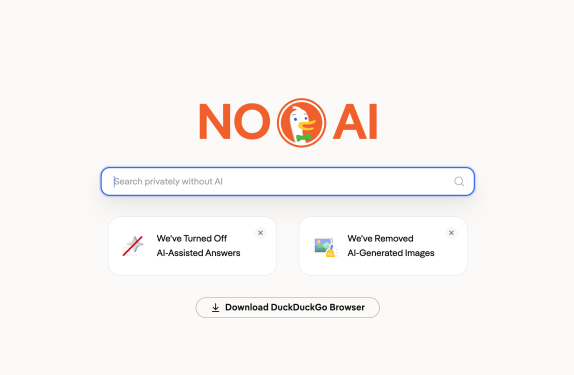
- DuckDuckGo’s installs have increased by 30% as users show a preference against being “force-fed” Google’s AI Search, indicating a growing user demand for privacy and control over AI integration (Source: TechCrunch).
- OpenRouter has more than doubled its valuation to $1.3 billion in a year, showcasing the significant investment and growth in the AI infrastructure space (Source: TechCrunch).
- Universal Music Group and TikTok have renewed their agreement to combat unauthorized AI music, addressing ethical issues surrounding AI-generated content (Source: TechCrunch).
- ZDNET reports on Google’s intriguing video-cloning Omni AI and the rise of free, private, and local AI solutions like Ollama, which some professionals prefer over ChatGPT for privacy reasons (Source: ZDNET Artificial Intelligence).
Practical Implications for Users and Businesses
The emergence of a new AI model brings both opportunities and challenges. For individuals, these models can enhance productivity, offer personalized assistance, and unlock new creative avenues. For businesses, the implications are even broader, from streamlining operations with AI automation tools to developing innovative products and services. Evaluating a new AI model involves considering its specific capabilities (e.g., coding, vision, agentic actions), its ethical guidelines, and its integration potential with existing systems. The rise of local AI solutions, like Ollama, also presents an alternative for those prioritizing data privacy and control, allowing AI to run directly on personal hardware rather than relying on cloud services.
Risks and Limitations of Emerging AI Models
Despite the exciting advancements, new AI models come with inherent risks and limitations that users and developers must consider. AI security is a major concern, with companies like Google actively navigating real-time challenges. The potential for “AI work-slop” is another issue, with 51% of professionals reporting that AI tools can actually lower their productivity if not managed correctly, as noted by ZDNET. Ethical considerations are also paramount; for instance, the renewal of agreements between Universal Music Group and TikTok highlights the ongoing battle against unauthorized AI-generated content. Even religious institutions are weighing in, with the Pope’s AI encyclical addressing the ethical implications of AI. Furthermore, the need for image watermarks, as introduced by OpenAI, demonstrates efforts to make it easier to spot AI-generated fakes, combating misinformation and maintaining trust in digital content.
What to Watch Next in the World of New AI Models
The rapid evolution of AI means there’s always something new on the horizon. Here’s what to keep an eye on:
- Agentic AI Development: Expect continued advancements in AI models that can autonomously plan, execute, and monitor complex tasks, moving beyond simple responses to proactive problem-solving. Google’s Gemini Omni is a prime example of this direction.
- Enhanced Multimodality: Future AI models will likely excel further in understanding and generating content across various formats, including text, images, audio, and video, leading to more integrated and intuitive user experiences.
- Ethical AI & Safety: As AI becomes more powerful, the focus on responsible AI development, safety, and ethical guidelines will intensify. Look for more initiatives aimed at securing critical software and ensuring transparency in AI-generated content.
- Competition Among LLMs: The race between major players like Google, Anthropic, and OpenAI will continue to drive innovation. Keep an eye on latest LLM updates from all providers, as each vies for market leadership and superior performance.
- Specialized AI Applications: We’ll see more AI models tailored for specific industries and tasks, such as Anthropic’s Claude Design for visual work or Google’s Gemini for Science, leading to highly efficient and targeted solutions.
The journey of AI is just beginning, and staying informed about these developments is essential for anyone looking to harness its potential.
FAQ: Your Questions About New AI Models Answered
What is the bottom line on new AI models?
The bottom line is that new AI models are becoming significantly more capable, moving towards agentic behaviors that can handle complex, multi-step tasks across various modalities like text, code, and vision. This means more powerful tools for automation, creativity, and problem-solving, but also necessitates increased attention to ethical deployment and security.
Who are new AI models best for or most relevant to?
New AI models are relevant to a broad audience: general users seeking enhanced digital assistance, creators looking for advanced tools for content generation (e.g., Claude Design), small business owners aiming for AI automation tools, students needing research or writing aids, and professionals across all industries looking to boost productivity and innovation.
What are the main benefits and risks of new AI models?
Benefits: Increased productivity, enhanced creativity, advanced automation, personalized assistance, faster scientific discovery, and more intuitive human-computer interaction.Risks: Security vulnerabilities, potential for “AI work-slop” leading to decreased productivity if misused, ethical concerns around unauthorized content generation and data privacy, and the challenge of identifying AI-generated fakes.
How do new AI models compare with alternatives or previous versions?
New AI models, such as Anthropic’s Claude Opus 4.7 and Google’s Gemini 3.5, generally offer superior performance in complex reasoning, multi-step task execution, and multimodal understanding compared to their predecessors. They are more “agentic,” meaning they can take more initiative and perform actions, whereas older models were often limited to simpler conversational or generative tasks. The choice between models often depends on specific use cases, ethical considerations, and desired features (e.g., ad-free experience, local deployment).
What should readers check before deciding on a new AI model?
Before adopting a new AI model, readers should check:
- Specific Capabilities: Does it meet your needs for coding, vision, writing, or agentic tasks?
- Ethical Guidelines & Safety: How does the developer address issues like bias, misinformation, and data privacy?
- Integration: Can it easily integrate with your existing tools and workflows?
- Cost & Access: Is it free, subscription-based, or enterprise-only?
- Community & Support: Is there a community or reliable support for troubleshooting and learning?
- Privacy: Does it offer local processing options or strong data protection policies?