The landscape of artificial intelligence is shifting rapidly. A new ai model is no longer just about a chatbot that can write an email; it is now about “agentic” systems that can take action, models that run entirely offline on your phone, and AI that bridges the gap between virtual simulations and physical robotics. From quantum computing to industrial manufacturing, the latest breakthroughs are redefining productivity and creativity.
At its core, a new ai model in 2026 refers to the next generation of large language models (LLMs), multimodal systems, and specialized neural networks designed for specific tasks like coding, visual design, or quantum physics. These models are moving away from simple prompt-and-response interactions toward autonomous agents that can manage complex workflows with minimal human oversight.
Table of Contents
On-Device AI: Google’s Gemma 4
One of the most significant shifts in accessibility is the move toward local inference. Google’s Gemma 4 represents a major leap in this direction. Unlike previous models that required a constant internet connection to reach a massive server, Gemma 4 is designed to run natively on devices like the iPhone.
The Power of Offline Inference
Running a new ai model locally means users no longer need an API key or a data connection to get high-quality AI assistance. This offline capability enhances privacy and speed, as data does not need to travel to a cloud server and back. According to AI Weekly, this allows for full on-device inference, making AI tools more reliable in remote areas or for users with strict data security requirements.
Practical Use Cases for Local AI
- Privacy-First Drafting: Writing sensitive documents without uploading them to a third-party server.
- Instant Response: Eliminating latency caused by network congestion.
- Battery Efficiency: Optimized models that provide intelligence without draining mobile hardware.
Quantum Computing: NVIDIA’s Ising
While most consumers focus on text and images, NVIDIA is pushing the boundaries of physics with Ising. This is the world’s first open AI model specifically designed for quantum computing. This breakthrough suggests that the next new ai model frontier isn’t just about more data, but about entirely different computing architectures.
Why Quantum AI Matters
Quantum computing allows for the processing of information in ways that classical computers cannot. By integrating AI models like Ising, researchers can solve problems in chemistry, material science, and cryptography that were previously considered impossible. As reported by Crescendo AI, this opens the door to a new era of scientific discovery where AI helps design the very hardware it runs on.
The Rise of Agentic AI and SDKs
We are transitioning from “Generative AI” to “Agentic AI.” While generative AI creates content, agentic AI performs tasks. This is evident in the launch of the OpenAI Agents SDK, which focuses on improving governance through sandbox execution. This means AI agents can now operate in a controlled environment to perform actions safely.
Enterprise Integration of Agents
Companies are quickly adopting these agentic tools to streamline business operations. For example, SAP has integrated agentic AI into human capital management to assist with HR and finance tasks. Similarly, Canva has introduced new agentic tools that transform creative design from a manual process into a collaborative effort between the user and the AI agent. You can learn more about these enterprise shifts at Artificial Intelligence News.
Developer Workflows and “Tokenmaxxing”
For developers, the new ai model trend is manifesting in tools like Claude Code Routines, which automate repetitive workflows using reusable prompt chains. However, this has led to a phenomenon known as “tokenmaxxing,” where developers rely so heavily on AI-generated tokens that they may actually become less productive by losing touch with the core logic of their code, a trend highlighted by TechCrunch.

Creative Evolution: Claude Design and Luma
Visual AI is evolving beyond simple image generation. Anthropic has launched Claude Design, a product specifically tailored for creating quick visuals, moving the model’s capabilities from pure text into the realm of rapid prototyping and design.
AI-Powered Production Studios
Beyond static images, Luma has introduced an AI-powered production studio. This allows creators to build complex visual narratives, such as the faith-focused Wonder Project, blending high-end production values with AI efficiency. These tools enable small teams to produce cinema-quality visuals that previously required massive budgets and hundreds of artists.
Physical AI and the Sim-to-Real Gap
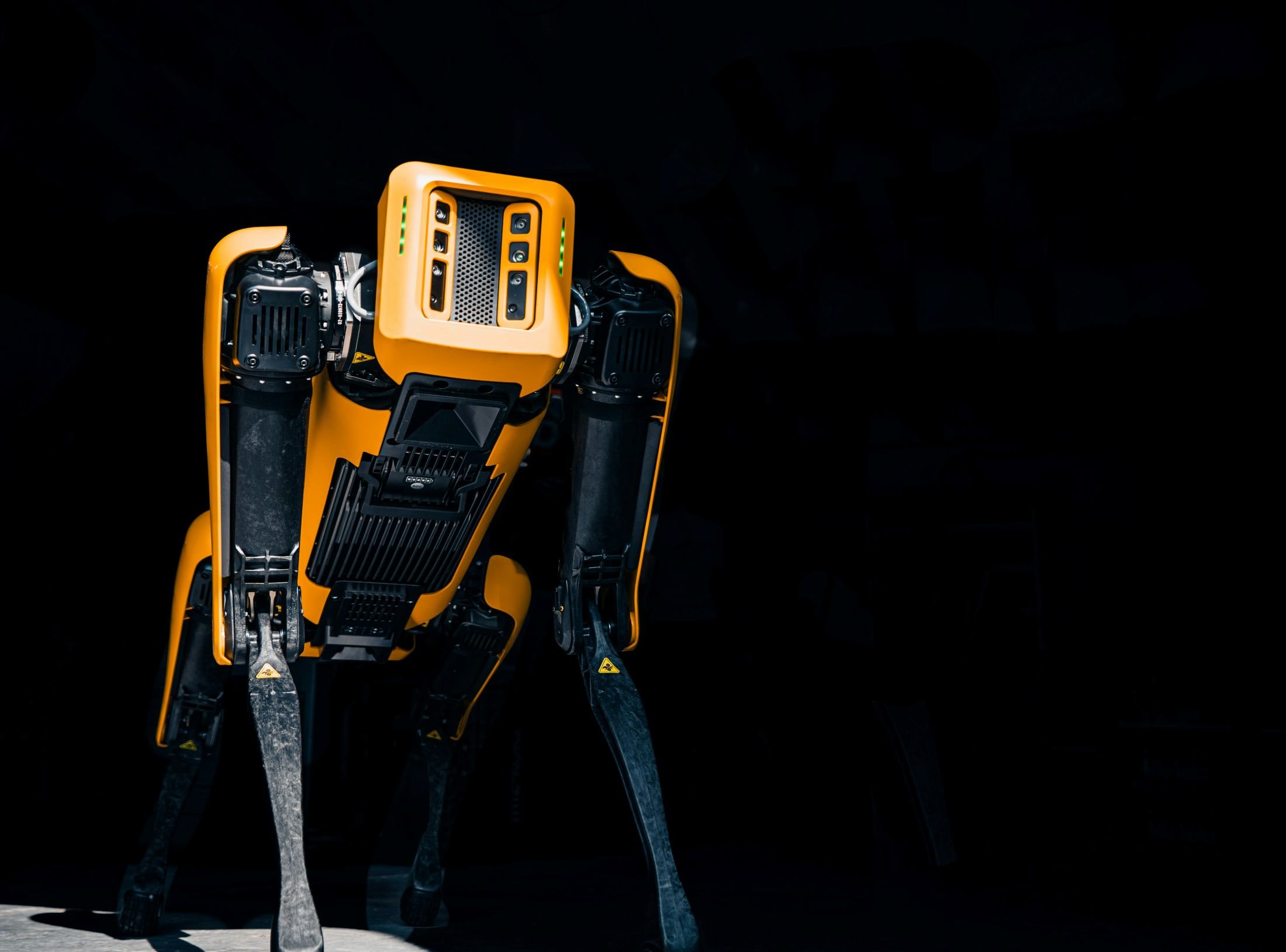
One of the hardest challenges in robotics is the “sim-to-real” gap—the performance drop that happens when a robot moves from a virtual training environment to the physical world. A partnership between Cadence and NVIDIA is tackling this by combining multiphysics simulation engines with NVIDIA’s Isaac robotics libraries.
Closing the Gap with World Models
By using Cosmos open-world models, researchers can create virtual environments that more accurately mimic the laws of physics. This ensures that when a new ai model is deployed into a physical robot, it doesn’t struggle with real-world friction or gravity. This technology is being expanded by companies like Hyundai, which is pushing further into physical AI systems to revolutionize manufacturing and logistics.
Industrial and Military AI Applications
AI is moving into heavy industry and national security. In China, Huawei has deployed a specialized AI model for steel manufacturing in Guangxi, using neural networks to optimize production and reduce waste.
AI in Strategic Warfare
The U.S. Air Force has debuted WarMatrix, an AI-powered wargaming system. This system can run simulations up to 10,000 times faster than real time, allowing military planners to test thousands of scenarios in a fraction of the time it would take manually. As noted by Crescendo AI, the goal is to keep human judgment central while using AI to handle the massive data processing required for strategic adjudication.
The Risks: Hallucinations and Legal Warnings
Despite the excitement, the deployment of every new ai model brings significant risks. The most prominent issue is “hallucinations,” where AI confidently presents false information as fact. This has already led to severe real-world consequences in the legal profession.
The Legal Perils of AI Use
In a notable case, the Nebraska Supreme Court suspended an attorney after his legal brief contained 20 AI-generated hallucinations, including fictitious cases and fabricated quotations. Furthermore, a Manhattan federal ruling by Judge Jed Rakoff warned that conversations with AI chatbots, such as Anthropic’s Claude, are not protected by attorney-client privilege. This means your AI prompts could potentially be used against you in court.
Labor and Social Impacts
The efficiency of these models is also impacting the job market. Snap recently cut approximately 1,000 jobs, citing AI-driven efficiencies. The company revealed that AI now generates over 65% of its new code, allowing smaller teams to achieve the same output as larger ones. This highlights a growing tension between technological progress and employment stability.
Frequently Asked Questions
What is a “new ai model” in 2026?
In 2026, a new ai model typically refers to an advanced system that goes beyond text generation. This includes agentic AI (which can perform tasks), on-device models (which run offline), and physical AI (which controls robotics).
Can I run AI models offline on my phone?
Yes, models like Google’s Gemma 4 are designed for native on-device inference, meaning they can run on hardware like an iPhone without needing an internet connection or an API key.
What is the “sim-to-real” gap in robotics?
The sim-to-real gap is the difference in performance between how a robot behaves in a virtual simulation and how it behaves in the physical world. New partnerships between NVIDIA and Cadence are using world models to close this gap.
Are AI chatbot conversations private?
Not necessarily. Recent federal rulings in the U.S. have indicated that conversations with AI platforms may not be protected by attorney-client privilege and could be subject to discovery in legal proceedings.
What is agentic AI?
Agentic AI refers to systems that can act as autonomous agents. Instead of just answering a question, they can use tools, execute code in sandboxes, and complete multi-step workflows to achieve a specific goal.