The world of artificial intelligence is moving at an incredible pace, with significant updates and a new launch in AI happening almost constantly. From powerful new language models to advanced robotics and practical tools, these developments are reshaping how we interact with technology and conduct business. This article breaks down the most important recent AI launches, explaining what they are, why they matter, and who they affect.
Big players like Google DeepMind and Anthropic are rolling out advanced iterations of their flagship AI models, such as Gemini 3.7 Flash and Claude Opus 5. These updates promise enhanced capabilities for complex tasks, better forecasting, and more intuitive user experiences. Beyond these major latest LLM updates, we’re also seeing practical AI tools emerge that are transforming industries and everyday work.
Quick Answer
Recent new launches in AI include Google DeepMind’s Gemini 3.7 Flash and Gemini Robotics updates, Anthropic’s Claude Opus 5 and Sonnet 5, along with new AI model routers and desktop applications, all pointing towards more agentic, integrated, and practical AI systems.
Table of Contents
- What’s New in AI: Key Launches Explained
- Why These New AI Launches Matter
- Who is Affected by the Latest AI Updates?
- What to Watch Next in AI
- FAQ
What’s New in AI: Key Launches Explained
The latest wave of AI innovation features more powerful models, specialized applications, and improved integration into daily workflows. These new launches in AI are pushing boundaries across various domains, from large language models to robotics and enterprise solutions.
Google’s Latest AI Innovations
Google has been particularly active, announcing several significant advancements. At I/O 2026, Google introduced the agentic Gemini era. This significant shift emphasizes AI systems that can proactively plan, reason, and execute complex tasks, moving beyond simple conversational responses. A key part of this is the launch of Gemini 3.7 Flash, an advanced iteration designed for efficiency and speed, excelling in long-running agents, sophisticated coding challenges, and diverse professional applications. This model aims to make AI more autonomous and capable of handling intricate workflows with minimal human intervention.
Further expanding its reach, Google DeepMind also unveiled significant advancements in robotics with Gemini Robotics ER 2. This system brings enhanced video understanding, allowing robots to interpret complex visual cues, alongside robust task orchestration capabilities. It also supports multi-robot collaboration, enabling teams of robots to work together seamlessly on larger projects. The concept of “whole body intelligence” is central to Gemini Robotics 2, meaning robots can now understand and interact with their physical environment more intuitively and effectively.
Beyond core models, Google is innovating in specialized areas. WeatherNext, an AI model, has achieved a breakthrough in forecasting cyclones, offering potentially life-saving early warnings. For music creators, Lyria 3.5 is launching in Google Flow Music, promising advancements in musicality, lyrics, vocals, and creative control. The Gemini app itself is seeing broader integration, from powering Waymo’s custom Ojai vehicles to offering interactive BTS experiences, making advanced AI more accessible to users. Professionals can also benefit from the free Google AI Professional Certificate, a valuable resource for skill development in this rapidly evolving field. However, with increased data interaction, Google also highlights the importance of understanding and managing privacy settings, particularly concerning business data in Workspace.
Anthropic’s Claude Updates
Anthropic, another leading AI research company, has also made waves with its latest latest LLM updates. The introduction of Claude Opus 5 marks a substantial improvement for its top-tier model. Opus 5 is engineered to power long-running agents and deliver superior performance in demanding coding tasks and complex professional workflows. This model focuses on reliability and advanced reasoning, making it a strong contender for enterprise-level applications where accuracy and consistency are paramount.
Complementing Opus 5, Anthropic also launched Sonnet 5, which provides frontier performance across coding, agents, and general professional work at scale. These models are part of Anthropic’s commitment to building reliable, interpretable, and steerable AI systems. The company also introduced Fable 5 globally and proposed an industry-wide framework for scoring jailbreak severity, collaborating with tech giants like Amazon, Microsoft, and Google. This initiative underscores the growing importance of AI safety and responsible deployment. Furthermore, Anthropic is expanding its reach into the enterprise sector through partnerships, such as the one with Cognizant, to bring Claude’s advanced capabilities to a wider range of business clients.
Other Notable AI Developments
The broader AI landscape is also bustling with innovation beyond these major players. Financial technology firm Ramp has launched its own AI model router, called Router, designed to optimize AI model usage for businesses. Meta AI has introduced a new Mac app, aiming to integrate conversational AI directly into the desktop experience, allowing users to interact with their applications more naturally. In the world of cryptocurrency, Binance now enables AI agents to trade, though it emphasizes that users are responsible for keeping these agents in check. On the privacy front, ChatGPT’s new Computer History tracks Mac activity to create a timeline, raising questions about data privacy and user control. Meanwhile, browsers like Firefox are adapting, with Firefox being highlighted as a strong contender for users prioritizing AI integration. Tools like Wispr Flow are emerging as superior alternatives to built-in voice text tools, showcasing practical AI applications for everyday productivity.
Why These New AI Launches Matter
These recent latest AI news and launches are not just incremental updates; they represent a significant leap forward in artificial intelligence capabilities and accessibility. They matter for several crucial reasons:
- Enhanced Productivity and Efficiency: Models like Gemini 3.7 Flash and Claude Opus 5, with their agentic capabilities, can automate complex, multi-step tasks that previously required human oversight. This translates to massive productivity gains for businesses and individuals, freeing up time for more strategic work.
- Advanced Problem Solving: Specialized AI, such as WeatherNext for cyclone forecasting, demonstrates AI’s potential to tackle critical global challenges with unprecedented accuracy. Gemini Robotics ER 2’s advancements in multi-robot collaboration open doors for more efficient and safer operations in manufacturing, logistics, and exploration.
- Democratization of Advanced AI: The introduction of user-friendly applications like Meta AI’s Mac app and the Gemini app’s broader integrations means that powerful AI tools are becoming more accessible to general users, not just developers. This fosters wider adoption and innovation.
- Creative Empowerment: Tools like Lyria 3.5 are transforming creative industries, offering new avenues for music composition and content generation, empowering artists and creators with sophisticated AI assistance.
- Economic Impact and ROI: The observed tripling in business adoption of AI agents, coupled with emerging measurable ROI, signifies that AI is moving from experimental technology to a core driver of economic value and competitive advantage.
- Focus on Safety and Ethics: Initiatives like Anthropic’s jailbreak severity framework highlight a growing industry-wide commitment to developing AI responsibly, addressing concerns around bias, misuse, and privacy.
These developments collectively push the boundaries of what AI can achieve, making it a more integral and transformative force in our lives.
Who is Affected by the Latest AI Updates?
The ripple effect of these new AI model breakthroughs is broad, touching various segments of society and industry:
- General Readers and Consumers: Everyday users will experience more intelligent and intuitive interactions with their devices and applications, from enhanced search capabilities to more personalized digital assistants. The Gemini app’s integration into various platforms is a prime example.
- Creators and Artists: Tools like Lyria 3.5 offer new creative palettes for musicians and content creators, enabling faster prototyping, ideation, and production of high-quality content.
- Small Business Owners: The rise of agentic AI and specialized AI automation tools means small businesses can leverage sophisticated technology to streamline operations, improve customer service, and gain competitive edges without needing large in-house tech teams.
- Students and Professionals: Educational resources like the Google AI Professional Certificate provide pathways for skill development, while advanced AI models offer powerful research and analytical tools across all professions.
- Developers and AI Researchers: These new models provide cutting-edge platforms for further innovation, offering more robust APIs and foundational models to build upon. The advancements in coding capabilities of Claude Opus 5 and Gemini 3.7 Flash are particularly relevant.
- Industries Across the Board:
- Robotics & Manufacturing: Gemini Robotics ER 2 promises more autonomous and collaborative robotic systems.
- Finance: Binance’s AI trading agents signify a shift in automated financial strategies.
- Automotive: Waymo’s integration of Gemini points to a future of more intelligent autonomous vehicles.
- Environmental Science: WeatherNext’s cyclone forecasting has direct implications for disaster preparedness and climate change mitigation.
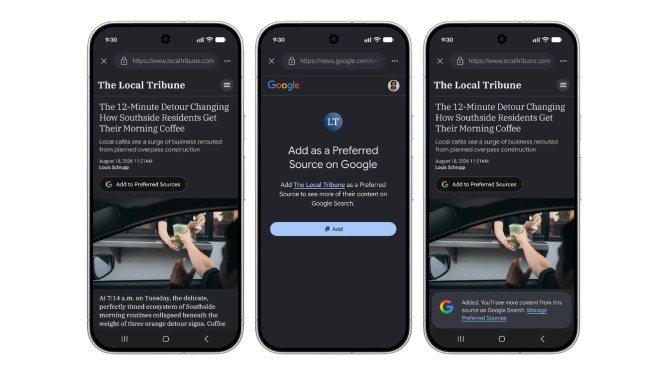
- Content & Publishing: The study indicating a third of web pages show signs of AI authorship highlights the ongoing transformation in content creation and the need for new strategies (e.g., Google’s tools for publishers to fight AI-driven traffic losses).
Essentially, anyone interacting with digital technology, creating content, or seeking to optimize processes will find themselves impacted by these advancements.
What to Watch Next in AI
The rapid pace of latest AI news guarantees that the landscape will continue to evolve dramatically. Here’s what to keep a close eye on:
- Further Agentic AI Development: Expect to see more sophisticated AI agents capable of handling increasingly complex, multi-domain tasks with greater autonomy. The “agentic Gemini era” is just beginning, and other LLMs will follow suit, leading to more intelligent AI automation tools.
- Multimodal AI Integration: The ability of AI to seamlessly process and generate information across text, image, audio, and video will become even more pronounced. Gemini Robotics ER 2’s video understanding is an early indicator of this trend.
- Ethical AI and Safety Frameworks: As AI becomes more powerful, the focus on responsible development, bias mitigation, and robust safety protocols (like Anthropic’s jailbreak severity framework) will intensify. Regulatory discussions and industry standards will play a crucial role.
- Personalized AI Assistants: Expect AI to become even more deeply integrated into personal devices and operating systems, offering highly personalized assistance across all digital interactions, potentially making interfaces like Meta AI’s Mac app commonplace.
- Specialized AI for Niche Applications: We’ll see a proliferation of AI models tailored for specific industries or tasks, much like WeatherNext for forecasting or Lyria 3.5 for music, offering precision and depth that general-purpose models cannot.
- Data Privacy and Security: With AI models processing vast amounts of personal and business data, the conversation around data privacy, control, and secure AI systems will remain a top priority. Users will need to be more aware of how their data is used, as seen with ChatGPT’s Computer History.
- The Future of Work and Creativity: AI’s impact on job roles, skill requirements, and creative processes will continue to be a dynamic area. Understanding how to collaborate with AI, rather than compete, will become increasingly vital.
Staying informed about these trends will be key to navigating the transformative power of AI in the coming years.
FAQ
What is the “agentic Gemini era” Google announced?
The “agentic Gemini era” refers to Google’s focus on developing AI systems, particularly Gemini, that can proactively plan, reason, and execute complex, multi-step tasks autonomously. This moves beyond simple conversational AI to systems that can act as intelligent agents to achieve goals.
How do Claude Opus 5 and Sonnet 5 differ?
Claude Opus 5 is Anthropic’s most advanced model, designed for highly complex tasks, long-running agents, and demanding professional and coding applications, offering top-tier performance. Sonnet 5 also offers frontier performance across coding, agents, and professional work but is generally optimized for broader scalability and efficiency, making it suitable for a wider range of enterprise applications.
What are some practical applications of these new AI launches for small businesses?
Small businesses can leverage these new AI launches for enhanced AI automation tools, such as using agentic models to streamline customer service, automate marketing campaigns, manage inventory, or generate content. Specialized AI can also assist with data analysis, financial forecasting, and personalized client interactions, significantly boosting efficiency and competitiveness.
How are AI companies addressing safety and ethical concerns with these new models?
Leading AI companies like Anthropic are actively addressing safety and ethical concerns by developing frameworks for responsible AI deployment, such as the proposed industry-wide framework for scoring jailbreak severity. They are also investing in research for reliable, interpretable, and steerable AI systems and engaging in partnerships to ensure ethical use in enterprise settings. Data privacy features and user controls are also becoming more prominent.
What does the rise of AI authorship mean for online content?
The rise of AI authorship, with studies indicating a significant portion of web pages showing signs of AI writing, means a shift in content creation dynamics. It emphasizes the need for human oversight, fact-checking, and unique perspectives to maintain quality and authenticity. It also prompts platforms like Google to develop new ways for publishers to differentiate human-created content and address potential traffic losses due to AI-generated summaries.