Google’s Gemini AI continues to evolve rapidly, bringing a wave of new features, enhanced capabilities, and specialized applications designed to make artificial intelligence more integrated and helpful in our daily lives. From a significant shift towards an “agentic era” announced at Google I/O 2026 to new models like Gemini 3.7 Flash and advancements in areas like medical AI, robotics, and music, the latest Gemini AI updates are shaping how we interact with technology. This article breaks down these key developments, explaining what they are, why they matter, and what users can expect next.
Quick Answer
The latest Gemini AI updates include a strategic move towards an “agentic era” with Gemini deeply integrated across services, the release of Gemini 3.7 Flash for faster performance, and significant advancements in specialized AI applications such as medical consultations (AMIE), cyclone forecasting (WeatherNext), robotics, and AI-powered music creation (Lyria 3.5), alongside continued expansion of the Gemini app’s user base and features.
Table of Contents
- The Agentic Era: Gemini’s Evolving Role
- Gemini App Sees Massive Growth & New Features
- Introducing Gemini 3.7 Flash and Specialized AI Models
- User Experience and Addressing Current Challenges
- Why These Latest Gemini AI Updates Matter
- What to Watch Next in Gemini AI
- FAQ
The Agentic Era: Gemini’s Evolving Role
Google I/O 2026 marked a pivotal moment for Gemini, heralding the arrival of the “agentic era.” This signifies a major shift where AI models like Gemini are no longer just reactive chatbots but proactive, intelligent agents capable of understanding complex, multi-step tasks and executing them across various applications and services. Instead of simply answering questions, Gemini aims to anticipate needs, automate workflows, and complete entire projects with minimal human intervention. This evolution promises to make latest AI news even more impactful, transforming how individuals and businesses approach productivity and problem-solving. It means less manual prompting and more intelligent, context-aware assistance, fundamentally changing the user experience.
Gemini App Sees Massive Growth & New Features
The Gemini app has achieved a significant milestone, now boasting over 1 billion monthly users. This widespread adoption underscores its growing importance in daily digital interactions. Google continues to expand Gemini’s utility by enabling it to connect with even more of your favorite apps and services. This means deeper integration with tools like Google Workspace, allowing Gemini to seamlessly assist with tasks in Gmail, Docs, and Sheets, and potentially extending to third-party applications. Recent updates, like those highlighted in July’s “Gemini Drop,” consistently introduce new features and enhancements, making the app more powerful and versatile. For general readers, creators, and small business owners, this means a more unified and efficient digital environment, where AI assistance is always at hand, streamlining everything from content creation to data analysis.
Introducing Gemini 3.7 Flash and Specialized AI Models
The continuous refinement of Gemini’s underlying models is key to its expanding capabilities. Google DeepMind recently introduced Gemini 3.7 Flash, a new iteration designed for speed and efficiency. This model is optimized for tasks requiring rapid responses and lower computational costs, making it ideal for real-time applications and large-scale deployments. Beyond general-purpose models, Google is also pushing the boundaries with highly specialized AI systems:
AMIE: Revolutionizing Medical Consultations
AMIE (Artificial Medical Intelligence Engine) is a groundbreaking research medical AI system that demonstrates real-time clinical video consultation capabilities. This advancement holds immense promise for improving healthcare accessibility and diagnostic support, especially in underserved areas. It can assist medical professionals by analyzing symptoms, suggesting diagnoses, and even participating in patient interactions, showcasing a significant step in how new AI model breakthroughs can directly impact human well-being.
WeatherNext: Advanced Cyclone Forecasting
In the realm of environmental science, WeatherNext is an AI model that has achieved a breakthrough in forecasting cyclones. By leveraging advanced machine learning, it can predict weather patterns with greater accuracy and speed, providing crucial early warnings. This directly impacts public safety and disaster preparedness for communities in vulnerable regions, allowing for better resource allocation and evacuation strategies.
Gemini Robotics ER 2: Intelligent Automation
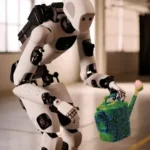
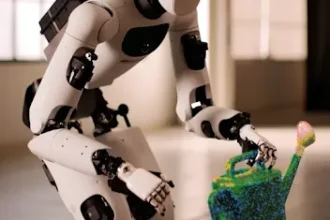
Gemini Robotics ER 2 brings whole-body intelligence to robots, enhancing their capabilities with advanced video understanding, sophisticated task orchestration, and multi-robot collaboration. This means robots can now interpret complex visual information, plan and execute intricate sequences of actions, and work together more effectively. This is a game-changer for industries like manufacturing, logistics, and exploration, where advanced AI automation tools can lead to unprecedented efficiencies and new possibilities.
Lyria 3.5: Empowering Music Creation
For creators, Lyria 3.5, integrated into Google Flow Music, represents significant advances across musicality, lyrics, vocals, and creative control. This AI model empowers musicians and content creators to generate, modify, and enhance music with sophisticated AI assistance, opening new avenues for artistic expression and production. It’s an exciting development for the entertainment industry and independent artists alike.
User Experience and Addressing Current Challenges
While the advancements are impressive, Google is also actively working to refine the user experience. For instance, some users have reported issues with Gemini voice calling on Android Auto, experiencing failures during use. Google is aware of these challenges and is committed to addressing them, with fixes expected by September. This focus on practical reliability is crucial for building user trust and ensuring that Gemini’s powerful capabilities translate into seamless, dependable everyday utility. Ensuring smooth integration and functionality in critical applications like Android Auto is vital for Gemini’s broader acceptance and success among general users.
Why These Latest Gemini AI Updates Matter
These latest Gemini AI updates are more than just technical enhancements; they represent a fundamental shift in how AI can serve us. The move to an “agentic era” means AI will become a more proactive partner, anticipating needs and automating complex tasks, freeing up valuable time for individuals and businesses. The massive growth of the Gemini app and its expanded integrations make advanced AI accessible and deeply embedded in our digital lives. Furthermore, specialized models like AMIE, WeatherNext, Gemini Robotics ER 2, and Lyria 3.5 demonstrate AI’s potential to drive innovation and solve real-world problems across diverse sectors, from healthcare and disaster management to industrial automation and creative arts. These developments promise increased productivity, greater accessibility, and new opportunities for innovation for everyone from students to professionals.
What to Watch Next in Gemini AI
Looking ahead, several key areas will define the future of Gemini AI. We can expect even more sophisticated agentic capabilities, allowing Gemini to manage increasingly complex, multi-domain tasks autonomously. Further development of specialized AI models will likely continue, leading to breakthroughs in niche applications. Enhanced multimodal interactions, where Gemini seamlessly processes and generates information across text, image, audio, and video, will become more common. The competition among latest LLM updates from Google, OpenAI, Anthropic, and Microsoft will continue to drive rapid innovation, pushing the boundaries of what AI can do. Keep an eye on ethical considerations and safety protocols as these powerful AIs become more integrated into critical systems.
FAQ
What does the “agentic era” mean for Gemini users?
The “agentic era” means Gemini will transition from being a reactive chatbot to a proactive, intelligent agent. Instead of merely responding to direct prompts, Gemini will be able to understand complex goals, plan multi-step actions, and execute tasks across various applications and services autonomously. This translates to more intelligent assistance, automated workflows, and a more seamless, hands-free experience for users.
How is Gemini expanding beyond just a chatbot?
Gemini is expanding beyond a simple chatbot through deep integration across Google’s ecosystem and third-party apps, specialized AI models, and its evolution into an agentic system. It’s being deployed in areas like medical diagnostics (AMIE), weather forecasting (WeatherNext), robotics control (Gemini Robotics ER 2), and music creation (Lyria 3.5), demonstrating its versatility and ability to perform highly specific, complex functions that go far beyond conversational AI.
What are some practical applications of the new specialized Gemini models?
Practical applications of the new specialized Gemini models include AMIE assisting doctors with real-time clinical video consultations, potentially speeding up diagnoses and improving patient care. WeatherNext can provide more accurate and timely cyclone forecasts, enhancing disaster preparedness. Gemini Robotics ER 2 enables robots to perform more complex tasks in manufacturing and logistics through improved perception and collaboration. Lyria 3.5 empowers musicians to generate and refine musical compositions, lyrics, and vocals more efficiently within Google Flow Music.