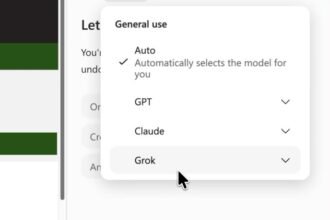
The world of Artificial Intelligence is moving at an incredible pace, and nowhere is this more evident than with Large Language Models (LLMs). These powerful AI systems, like the ones powering chatbots and content generators, are constantly evolving. Staying on top of the latest LLM updates isn’t just for tech enthusiasts; it’s crucial for anyone looking to leverage AI effectively in their work or daily life.
At HealingPoint, we cut through the technical noise to bring you clear, actionable insights. This guide will help you understand what’s happening with LLMs, why it matters, and how you can adapt to these ongoing changes.
Quick Answer: The Bottom Line on Latest LLM Updates
The latest LLM updates are characterized by continuous improvements in capability, efficiency, and accessibility. These advancements lead to more accurate, faster, and versatile AI tools that can understand and generate human-like text with greater nuance. While specific models frequently receive upgrades, the overarching trend is towards more powerful, multimodal, and specialized LLMs that integrate seamlessly into various applications, from creative content generation to complex data analysis. Keeping an eye on these developments helps users and businesses harness AI’s full potential.
Table of Contents
- What Are the Latest LLM Updates All About?
- Why Continuous LLM Evolution Matters
- Who Benefits from New AI Model Breakthroughs?
- How to Evaluate and Use the Latest LLM Updates
- Risks and Limitations of Emerging LLMs
- What to Watch Next in LLM Development
- Frequently Asked Questions (FAQ) About Latest LLM Updates
What Are the Latest LLM Updates All About?
Unlike traditional software that might see major version releases every few months or years, Large Language Models are in a state of near-constant evolution. This means that what’s considered the ‘best’ or ‘most advanced’ LLM can shift rapidly. The latest LLM updates typically focus on several key areas:
-
Increased Context Window:
This refers to the amount of information an LLM can ‘remember’ or process in a single interaction. Larger context windows allow for more complex conversations, longer document analysis, and more coherent creative writing without losing track of previous details.
-
Improved Reasoning and Accuracy:
Developers are continuously working to reduce ‘hallucinations’ (when LLMs generate factually incorrect information) and enhance the models’ ability to follow instructions, perform complex problem-solving, and generate more logical and accurate responses.
-
Multimodal Capabilities:
Many of the most exciting new AI model breakthroughs involve LLMs that can understand and generate not just text, but also images, audio, and video. This opens up entirely new applications, from generating descriptions for images to creating full multimedia presentations from a simple text prompt.
-
Enhanced Efficiency and Speed:
While models become more powerful, there’s also a significant push to make them run faster and require less computational power, making them more accessible and cost-effective for a wider range of users and businesses.
-
Specialized Models:
Beyond general-purpose LLMs, we’re seeing the rise of models fine-tuned for specific tasks or industries, such as legal research, medical diagnostics, or creative writing, offering unparalleled domain-specific performance.
-
Safety and Ethical AI:
A critical focus of these updates involves implementing stronger safeguards against generating harmful, biased, or inappropriate content, ensuring responsible AI development and deployment.
These ongoing refinements are driven by advancements in neural network architectures, access to ever-larger and more diverse training datasets, and sophisticated optimization techniques.
Why Continuous LLM Evolution Matters
The rapid evolution of LLMs isn’t just a technical curiosity; it has profound implications across various sectors. For individual users, the latest LLM updates mean access to more powerful, intuitive, and reliable AI automation tools. Imagine a personal assistant that understands your nuanced requests better, a writing aid that produces more creative and contextually relevant content, or a learning tool that can explain complex topics with greater clarity.
For businesses, staying abreast of these developments is crucial for maintaining a competitive edge. Improved LLMs can streamline operations, enhance customer service through advanced chatbots, accelerate content creation, and even power new product development. The ability to integrate these cutting-edge models can lead to significant gains in productivity, innovation, and market responsiveness. Businesses that adapt quickly to these advancements can unlock new efficiencies and create entirely new value propositions for their customers.
Who Benefits from New AI Model Breakthroughs?
The impact of new AI model breakthroughs is incredibly broad, touching almost every segment of our audience:
-
General Readers:
Benefit from more intelligent search engines, personalized content recommendations, and more engaging interactive experiences.
-
Creators:
Writers, artists, musicians, and designers can leverage LLMs for brainstorming, drafting, generating initial concepts, or even producing entire pieces of content, significantly speeding up their creative workflows.
-
Small Business Owners:
Can utilize advanced LLMs for automating customer support, generating marketing copy, analyzing market trends, and optimizing internal communications, often without needing a large tech team. This democratizes access to sophisticated AI capabilities.
-
Students:
Gain access to powerful research assistants, personalized tutors, and tools for summarizing complex texts, making learning more efficient and engaging.
-
Professionals:
Across fields like law, medicine, finance, and software development, LLMs are becoming indispensable for research, data analysis, report generation, and coding assistance, augmenting human capabilities and boosting productivity.
Essentially, anyone who works with information, communication, or creativity stands to gain from understanding and applying the latest LLM updates.
How to Evaluate and Use the Latest LLM Updates
Navigating the constant stream of LLM advancements requires a strategic approach. Here’s how to effectively evaluate and integrate new models:
-
Stay Informed:
Follow reputable tech news sources, official announcements from AI labs (like Google, OpenAI, Anthropic), and specialized AI blogs. HealingPoint aims to be your go-to source for clear, jargon-free updates.
-
Hands-On Testing:
The best way to understand an LLM’s capabilities is to use it. Experiment with new models as they become available. Test them with your specific use cases, whether it’s content generation, data analysis, or coding.
-
Understand Limitations:
No LLM is perfect. Be aware of potential biases, factual inaccuracies (hallucinations), and privacy implications. Always fact-check critical information generated by AI.
-
Master Prompt Engineering:
The quality of an LLM’s output heavily depends on the quality of your input. Learn how to craft clear, specific, and effective prompts to get the best results from any model.
-
Consider Integration:
For businesses, evaluate how new LLMs can integrate into existing workflows or create new services. Look for APIs and developer tools that facilitate seamless adoption.
By adopting a proactive and informed approach, you can ensure you’re always leveraging the most effective AI tools available.
Risks and Limitations of Emerging LLMs
While the latest LLM updates bring immense potential, it’s equally important to acknowledge their inherent risks and limitations. These include:
-
Hallucinations and Factual Errors:
Despite improvements, LLMs can still generate plausible-sounding but incorrect information. Critical users must always verify facts.
-
Bias in Training Data:
LLMs learn from vast datasets, which can contain societal biases. These biases can inadvertently be reflected in the model’s outputs, leading to unfair or discriminatory results.
-
Data Privacy and Security:
Using LLMs, especially cloud-based ones, raises concerns about the privacy of the data input by users. Organizations need to be mindful of sensitive information.
-
Computational Cost:
Training and running advanced LLMs require significant computational resources, contributing to environmental concerns and making them expensive to develop and maintain.
-
Ethical Dilemmas:
The ability of LLMs to generate highly convincing text can be misused for misinformation, deepfakes, or automated spam, posing ethical challenges that developers and society must address.
Addressing these challenges is an ongoing effort, with researchers focusing on explainable AI, bias detection and mitigation, and robust ethical guidelines.
What to Watch Next in LLM Development
The future of LLMs promises even more transformative advancements. Here’s what to keep an eye on as part of the latest LLM updates and broader latest AI news:
-
True Multimodality:
Expect more seamless integration and understanding across text, image, audio, and video, leading to truly holistic AI experiences.
-
Autonomous AI Agents:
LLMs evolving into agents that can not only understand and generate but also plan, execute tasks, and interact with various tools and environments independently.
-
Personalized and Adaptive LLMs:
Models that learn and adapt to individual user preferences, styles, and knowledge over time, offering a truly bespoke AI experience.
-
Smaller, More Efficient Models:
The trend towards