The world of Artificial Intelligence is evolving at a breakneck pace, with major players like OpenAI, Google, and Anthropic continuously rolling out significant advancements. This latest AI update brings new powerful models, enhanced capabilities, and practical applications designed to integrate AI deeper into our daily lives and professional workflows. From more intelligent chatbots to advanced agentic systems, these updates promise to reshape how we interact with technology and automate tasks.
Understanding these developments is crucial for anyone looking to stay ahead in the digital landscape. This article breaks down the key changes, why they matter, and what to expect next from the rapidly expanding AI frontier.
Quick Facts: The Latest AI Update at a Glance
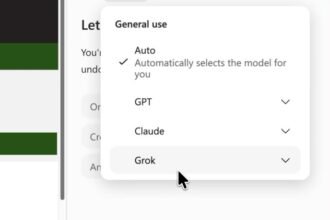
- OpenAI’s GPT-5.6: Now the preferred model for Microsoft Copilot 365, indicating improved performance and integration. OpenAI is also focusing on bringing ChatGPT into households.
- Google Gemini Omni & Flash: Google DeepMind has introduced Gemini Omni and new Flash models, alongside expanding managed agents in the Gemini API, pushing towards an ‘agentic Gemini era’.
- Anthropic’s Fable 5 & Sonnet 5: Anthropic launched Fable 5 with enhanced cyber safeguards and Sonnet 5 for high-performance coding and professional tasks, emphasizing responsible AI development.
- Industry Shifts: Meta removed a controversial AI feature from Instagram, and Apple has sued OpenAI, highlighting ongoing ethical and competitive challenges in the AI space.
Table of Contents
- OpenAI’s Latest Moves: GPT-5.6 and Broader Reach
- Google’s Gemini Evolution: Omni, Flash, and Agentic Future
- Anthropic’s Advancements: Fable 5, Sonnet 5, and Responsible AI
- Why These AI Updates Matter for You
- Who Is Affected by the Latest AI Developments?
- What to Watch Next in the AI Landscape
- FAQ About the Latest AI Update
OpenAI’s Latest Moves: GPT-5.6 and Broader Reach
OpenAI continues to be a central figure in the artificial intelligence landscape with several notable developments. The company recently launched its new family of models, including GPT-5.6, which is quickly becoming a preferred choice for large-scale applications. ZDNET reports that GPT-5.6 is seen as a rival to Anthropic’s Fable 5 and is now the ‘preferred model’ for Microsoft Copilot 365, aiming to surpass competitors in price, speed, and productivity.
GPT-5.6: Powering Microsoft Copilot and Beyond
The integration of GPT-5.6 into Microsoft Copilot 365 signifies a major step towards making advanced AI more accessible and efficient for business and personal productivity. This move suggests that OpenAI is focusing on robust, enterprise-grade AI solutions that can handle complex tasks with greater accuracy and speed. Users of Copilot can expect a more refined and capable AI experience, streamlining workflows and enhancing output.
ChatGPT’s Family Focus and Atlas Shutdown
Beyond enterprise solutions, OpenAI is also making strides in consumer AI. TechCrunch notes that OpenAI is ‘betting on families’ as ChatGPT aims to deepen its presence in households. This indicates a strategic push to make AI tools more intuitive and beneficial for everyday family use, from educational assistance to household management. However, not all ventures are expanding; OpenAI is reportedly shutting down Atlas, its AI browser ambitions, to focus on other core areas.
Legal Landscape: Apple vs. OpenAI
The competitive and ethical landscape of AI is becoming increasingly complex. TechCrunch also reported that Apple is suing OpenAI over alleged trade secret theft. This legal challenge highlights the intense competition and intellectual property concerns arising as AI technology rapidly advances, underscoring the need for clear guidelines and ethical considerations in AI development.
Google’s Gemini Evolution: Omni, Flash, and Agentic Future
Google is aggressively advancing its Gemini AI models, signaling a new ‘agentic Gemini era’ as announced at Google I/O 2026. These advancements from Google DeepMind are designed to make AI more capable, interactive, and integrated across various platforms. You can find more details on these developments by checking out the latest Gemini AI updates.
Introducing Gemini Omni and Flash Models
Google DeepMind has introduced powerful new iterations such as Gemini Omni, Nano Banana 2 Lite, and Gemini Omni Flash. These models represent breakthroughs in AI capabilities, with Gemini 3.5 Flash now featuring computer use, allowing for more dynamic and responsive interactions. These models aim to provide developers and users with more versatile and efficient AI tools.
Gemini’s Practical Applications: Study Notebooks & Image Creation
The Gemini app is also expanding its practical applications for everyday users. New study notebooks help users learn with personalized lessons, practice quizzes, and custom progress dashboards, making education more interactive and tailored. Furthermore, the Gemini app is bringing personalized image creation to more users, offering creative tools directly within the platform. These features, detailed on the Official Google AI news and updates blog, demonstrate Google’s commitment to making AI both powerful and user-friendly.
Expanding Managed Agents and API Capabilities
For developers, Google is expanding Managed Agents in the Gemini API, which now includes background tasks and remote MCP. The Interactions API serves as the primary interface for Gemini models and agents, providing robust tools for building sophisticated AI applications. Additionally, DiffusionGemma offers 4x faster text generation, significantly boosting efficiency for various content creation and development tasks.
Anthropic’s Advancements: Fable 5, Sonnet 5, and Responsible AI
Anthropic, an AI safety and research company, is also pushing the boundaries of AI with new model releases and a strong focus on responsible development. Their latest announcements underscore a commitment to building reliable, interpretable, and steerable AI systems. For more comprehensive information on these developments, explore the latest LLM updates.
Fable 5 and the Jailbreak Framework
Anthropic’s Fable 5 model has returned globally, featuring enhanced cyber safeguards. In a move towards industry-wide safety, Anthropic is proposing a framework for scoring jailbreak severity, working alongside major tech companies like Amazon, Microsoft, and Google. This collaborative effort aims to establish common standards for evaluating and mitigating risks associated with AI misuse.
Sonnet 5 and Claude Science for Professionals
For professionals and developers, Anthropic has introduced Sonnet 5, which delivers frontier performance across coding, agents, and other professional work at scale. This model is designed to handle complex tasks with efficiency and precision. Additionally, Claude Science is now available as a customizable app that integrates tools and packages frequently used by researchers, providing auditable artifacts and flexible access to computing resources, as reported by Anthropic’s newsroom.
New Tools for Reflection and Cybersecurity
Anthropic is also focusing on user experience and safety. They recently introduced a way for users to reflect on how they use Claude, promoting more mindful and effective AI interaction. In a practical application of their technology, the Government of Alberta is using Claude to identify and fix cybersecurity vulnerabilities across government systems, demonstrating the real-world impact of advanced AI in critical sectors.
Why These AI Updates Matter for You
These recent AI updates are not just technical milestones; they have significant implications for individuals, businesses, and the broader society. The advancements from OpenAI, Google, and Anthropic mean more powerful, accessible, and integrated AI tools are becoming available. This translates to increased efficiency in work, new creative possibilities, and improved access to information and learning. For the latest developments, keep an eye on latest AI news.
For small business owners, new AI automation tools can streamline operations, enhance customer service, and unlock new growth opportunities. Students and professionals can leverage these updated LLMs for research, personalized learning, and boosting productivity. However, these advancements also bring challenges, including ethical considerations, data privacy concerns, and the need for continuous skill development to adapt to evolving AI capabilities.
Who Is Affected by the Latest AI Developments?
Virtually everyone who interacts with technology will be affected by these latest AI updates:
- General Users: Will experience more intelligent chatbots, personalized content, and new creative tools in apps they use daily.
- Creators and Developers: Gain access to more powerful models and APIs, enabling the creation of more sophisticated applications and content.
- Small Business Owners: Can utilize enhanced AI automation for tasks like customer support, marketing, and data analysis, improving efficiency and competitiveness.
- Students: Benefit from personalized learning experiences, research assistance, and tools like Gemini’s study notebooks.
- Professionals: Across various industries, from coding with Sonnet 5 to cybersecurity with Claude, professionals will find new ways to enhance productivity and solve complex problems.
What to Watch Next in the AI Landscape
The rapid pace of AI innovation suggests several key areas to monitor in the coming months:
- Increased Agentic AI Capabilities: Expect further development in AI agents that can perform multi-step tasks autonomously, as highlighted by Google’s ‘agentic Gemini era’.
- Enhanced Multimodality: AI models will continue to improve in understanding and generating content across various formats, including text, images, audio, and video.
- Ethical AI and Safety Frameworks: With ongoing legal challenges and industry collaborations like Anthropic’s jailbreak framework, expect more robust discussions and standards around AI ethics, safety, and responsible deployment.
- Open-Source AI Growth: The importance of open-source AI, as emphasized by Hugging Face’s CEO, will likely lead to more collaborative and transparent development, fostering innovation across a wider community.
- Integration into Everyday Devices: AI will become even more embedded in operating systems (like Apple’s Intelligence for Siri) and consumer devices, making advanced capabilities seamlessly part of our digital lives.
These trends point towards a future where AI is not just a tool but an integral part of our digital ecosystem, continuously evolving to offer new possibilities and challenges. Stay tuned for new AI model breakthroughs as the industry progresses.
FAQ About the Latest AI Update
What is the bottom line on the latest ai update?
The latest ai update showcases significant advancements from OpenAI, Google, and Anthropic, bringing more powerful, integrated, and application-focused AI models. Key highlights include OpenAI’s GPT-5.6 for Copilot, Google’s Gemini Omni and agentic features, and Anthropic’s Fable 5 and Sonnet 5 for safety and performance.
Who is ai update best for or most relevant to?
These ai updates are relevant for a broad audience, including general users seeking more intelligent digital assistance, creators and developers building new applications, small business owners looking for automation, and professionals across various sectors aiming to enhance productivity and cybersecurity.
What are the main benefits and risks of ai update?
Benefits: Improved productivity, personalized learning, advanced creative tools, enhanced cybersecurity, and more efficient automation. Risks: Ethical concerns, data privacy issues, potential for misuse (e.g., jailbreaks), and the need for continuous adaptation to new technologies.
How does ai update compare with alternatives?
The latest ai update shows a competitive landscape where models like OpenAI’s GPT-5.6 are directly rivaling Anthropic’s Fable 5 and Google’s Gemini offerings in terms of performance, speed, and cost-effectiveness. Each platform offers unique strengths, with OpenAI focusing on broad integration, Google on agentic capabilities, and Anthropic on safety and specialized professional tools.
What should readers check before deciding on ai update?
Before adopting a new AI tool or model, readers should consider their specific needs, the integration capabilities with existing workflows, the cost, data privacy policies, and the level of support available. It’s also wise to stay informed about the ethical guidelines and safety features of the AI update in question.
Related Reading